Measuring Facebook Ad Performance: Expert Guide for Business
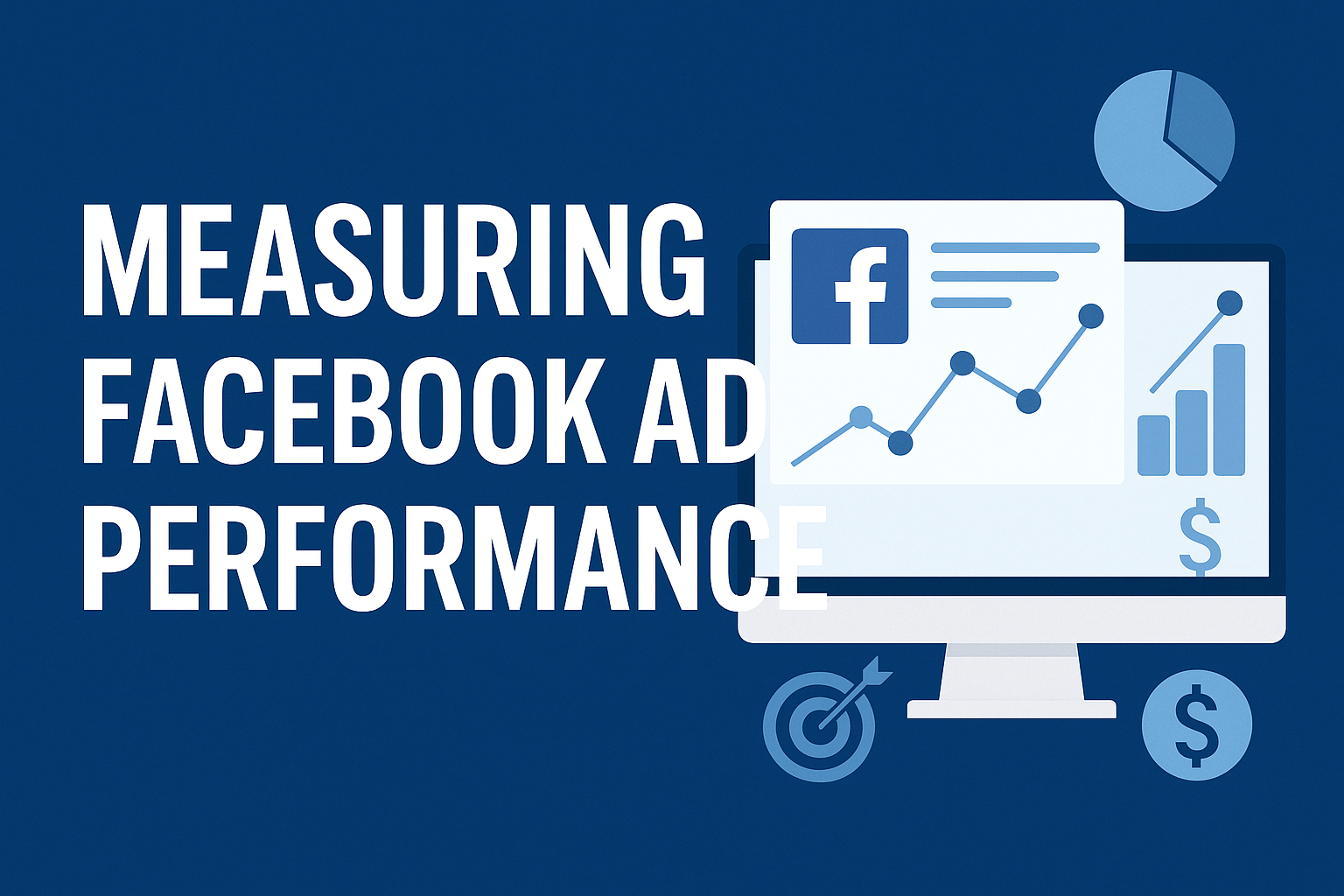
Measuring Facebook ad performance is a vital component of any successful digital marketing strategy. Businesses invest significant resources into Facebook and Instagram advertising, but without the ability to interpret performance metrics accurately, these investments often yield underwhelming results. Meta provides a suite of tools designed to help advertisers understand, track, and improve their campaign outcomes, yet many business users struggle to make the most of these resources. Knowing how to interpret the data and apply insights is key to optimising campaigns and maximising return on ad spend.
When businesses set out to evaluate the performance of their Facebook advertising, the journey typically begins with Ads Manager. This tool is the central hub for managing campaigns and offers visibility into a wide array of metrics. However, it’s not just about reading numbers—it’s about understanding what they mean in context. For instance, reach and impressions are often the first figures marketers encounter. Reach refers to the number of unique users who saw an ad, while impressions measure the total number of times the ad appeared on screens. While both are useful for gauging visibility, they don’t provide insight into whether the ad is actually working.
To dig deeper, businesses must consider engagement metrics like click-through rate, which reveals how many people acted on the ad after seeing it. A low click-through rate may indicate irrelevant content or poor targeting, whereas a high rate suggests that the message and audience are well matched. However, even engagement is just one part of the equation. Ultimately, it’s conversion rate—the percentage of users who complete a desired action after interacting with an ad—that reveals the campaign’s true effectiveness. This could be anything from filling out a form to making a purchase. To evaluate cost-efficiency, advertisers often turn to metrics such as cost per click and cost per result, which help determine how much is being spent to achieve specific outcomes.
Of course, no performance review is complete without considering return on ad spend. This crucial figure illustrates the revenue generated for every pound spent and provides a clear picture of profitability. A ROAS of 3, for example, means that for every £1 invested, £3 was earned. It’s a metric that resonates with stakeholders because it directly links advertising to financial outcomes. Still, ROAS should never be assessed in isolation. For some campaigns, particularly those focused on brand awareness, other metrics such as engagement rate or ad recall might be more appropriate measures of success.
Another important consideration when measuring Facebook ad performance is how often users see your ads. Frequency measures the average number of times a user encounters your content. While repeated exposure can boost recognition, excessive frequency can lead to ad fatigue, causing users to disengage or even hide your ads. Managing this balance is essential to maintaining campaign effectiveness over time.
The landscape of digital advertising has shifted dramatically in response to evolving privacy regulations such as GDPR and Apple’s iOS updates. These changes have made tracking user behaviour more challenging. To address this, Meta introduced tools like the Conversions API, which allows server-side tracking of events, and Aggregated Event Measurement, which supports data collection in a privacy-compliant manner. Relying solely on the Meta Pixel is no longer sufficient, as browser-based tracking is increasingly limited. Businesses should integrate both the Pixel and the Conversions API to ensure reliable data flows and to maintain the accuracy of their reports.
A successful strategy for measuring Facebook ad performance starts with clearly defined objectives. Every campaign in Meta’s ecosystem is goal-oriented, whether it’s focused on awareness, consideration, or conversion. These objectives determine which metrics matter most. Businesses must also be mindful of attribution settings—specifically, the timeframe in which conversions are tracked following ad interaction. With privacy restrictions limiting the availability of long attribution windows, advertisers must choose realistic timeframes, such as one-day or seven-day click-through models, depending on their customer journey.
Tracking event data properly is critical. Meta allows businesses to configure a hierarchy of events—such as purchases, add-to-cart actions, and page views—using Aggregated Event Measurement. It’s essential to prioritise these events accurately, as only a limited number can be tracked. Additionally, businesses can define custom conversions to match specific goals, such as newsletter sign-ups or downloads, offering more meaningful insight into what matters most for their organisation.
To enhance campaign performance further, regular A/B testing is indispensable. Meta’s Experiments tool allows marketers to test variables such as creative design, headlines, or call-to-action buttons. This data-driven approach enables continual refinement and better results. Yet, with so much data available, it’s easy to become overwhelmed. Businesses should focus on the metrics that align closely with their objectives, whether that’s ROAS for e-commerce brands or engagement for those building community awareness.
Even experienced marketers can fall into common traps. Many rely too heavily on vanity metrics like impressions or likes, which don’t necessarily drive business outcomes. Others fail to verify that tracking systems like the Pixel or CAPI are functioning correctly, leading to misleading or incomplete data. It’s also important not to ignore the broader context—seasonal trends, economic factors, and platform algorithm changes can all influence performance. Making hasty optimisations based on short-term fluctuations may do more harm than good.
Audience targeting is another area where advertisers often go wrong. Using overly broad audiences with limited budgets can dilute results and obscure insights. Instead, it’s more effective to begin with narrower targeting, gather learnings, and then expand based on what works. Supplementing Meta’s data with third-party tools like Google Analytics can provide a more holistic view of user behaviour after they click an ad, helping marketers understand where drop-offs occur and how to optimise landing pages or user flows.
Advanced marketers might also consider tracking customer lifetime value to assess the long-term impact of campaigns. For instance, if users acquired through Facebook ads tend to become repeat customers, this justifies a higher initial investment. Predictive metrics—such as estimated action rate—can be useful for identifying which ad sets are likely to succeed early in the campaign cycle. Offline conversion tracking, where available, can also offer valuable insight, particularly for businesses that rely on phone calls or in-person visits.
Turning data into actionable insights is where the true value lies. For example, if you see a low click-through rate combined with high reach, it’s a sign your creative or audience targeting may need adjusting. A high cost per click with low ROAS may suggest your bid strategy is too aggressive, or your audience isn’t converting. Even strong engagement without conversions may point to a disconnect between ad messaging and the landing page experience. Analysing patterns like these helps refine future campaigns and improve overall performance.
In today’s data-conscious world, measuring Facebook ad performance isn’t just a technical exercise—it’s a strategic priority. With Meta’s tools becoming increasingly sophisticated, businesses that invest the time to understand and apply this data can gain a significant competitive edge. By setting clear objectives, integrating reliable tracking methods, and focusing on meaningful metrics, marketers can turn campaign performance from guesswork into precision. While the ecosystem is constantly evolving, those who adapt by embracing best practices and avoiding common mistakes will continue to thrive in an increasingly digital marketplace.