Meta Nuclear Energy Deal: Powering AI Sustainably
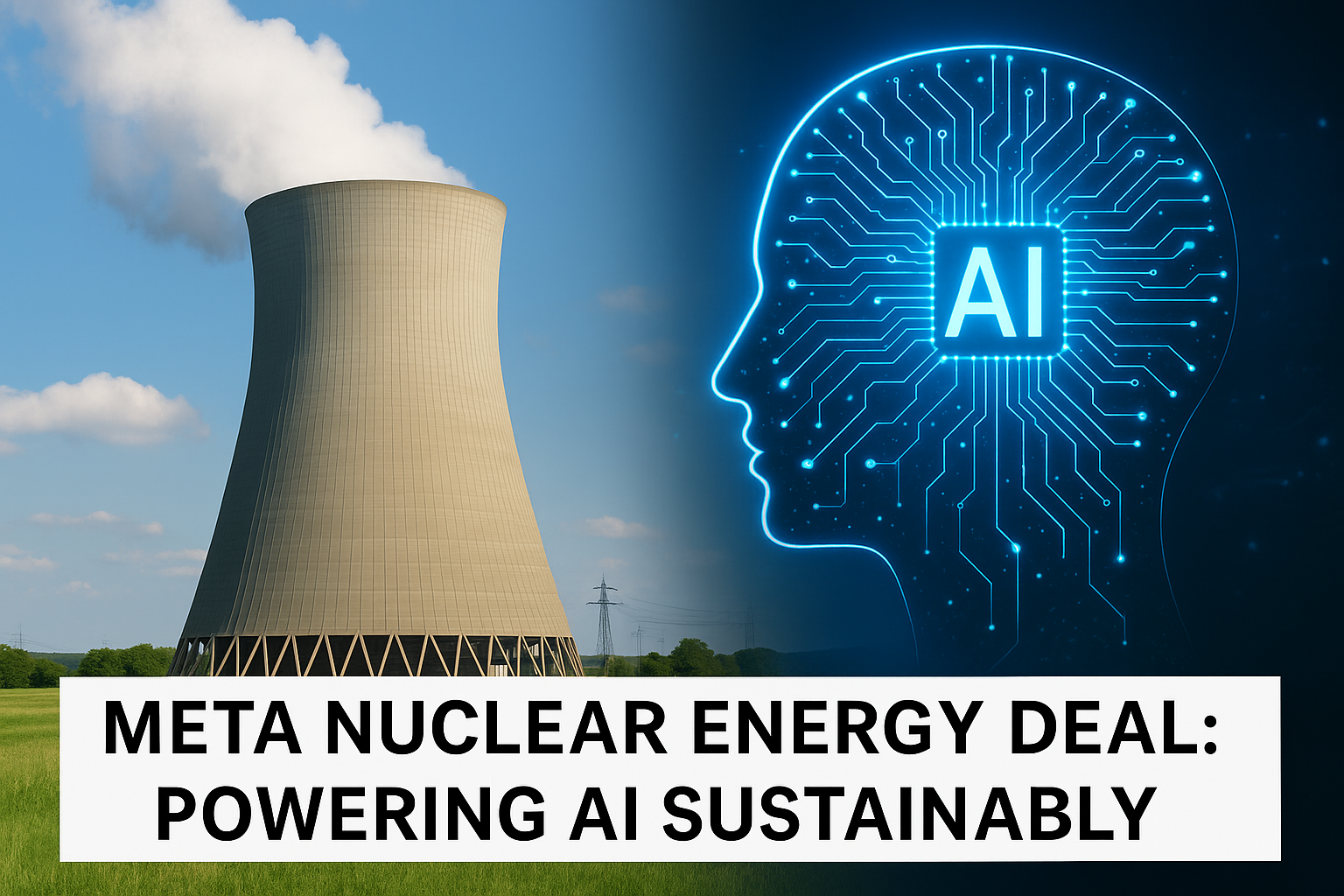
The Meta nuclear energy deal marks a significant milestone in the ongoing effort by major tech companies to power advanced technologies with cleaner, more sustainable energy sources. With artificial intelligence evolving at an unprecedented rate and consuming ever-increasing amounts of power, Meta Platforms—parent company of Facebook, Instagram and WhatsApp—has taken a bold step to futureproof its infrastructure. By securing a 20-year agreement with Constellation Energy for nuclear power from the Clinton Clean Energy Center in Illinois, Meta is reinforcing its commitment to sustainability while addressing the immense energy needs of its AI-powered services.
This landmark Meta nuclear energy deal is not just about locking in electricity. It’s a strategic decision designed to ensure operational stability and long-term environmental responsibility. Nuclear power, often controversial yet widely recognised for its ability to generate large amounts of carbon-free electricity, is now being adopted by tech leaders like Meta to guarantee their energy supply remains clean and uninterrupted. The Clinton plant, which will begin supplying Meta in 2027, had been under threat of closure due to the expiration of Illinois’ zero-emission credit programme. Meta’s intervention via this long-term deal has not only secured its own energy future but also safeguarded over 1,000 jobs and helped preserve a critical source of clean power in the Midwest.
The Clinton Clean Energy Center is capable of generating 1.1 gigawatts of electricity, a volume large enough to power hundreds of thousands of homes—or in Meta’s case, data centres powering some of the most resource-hungry AI applications in existence. With generative AI, machine learning, and complex algorithms forming the core of Meta’s products and services, this deal represents more than a logistical move. It’s a statement about the type of energy the company wants to associate with the future of artificial intelligence. By opting for nuclear over fossil fuels, Meta is directly linking its growth to climate responsibility.
In addition to purchasing existing capacity, the Meta nuclear energy deal includes provisions to expand output by an additional 30 megawatts. That’s enough electricity to power a city of 30,000 people. This not only benefits Meta, but also demonstrates how corporate energy agreements can trigger wider infrastructural investments. These expansions require engineering, regulatory approvals and local cooperation—areas where Meta is expected to engage directly, bringing private investment into public and semi-public spheres of energy development.
However, nuclear energy is not a plug-and-play solution. Despite being one of the most consistent sources of low-carbon electricity, it presents numerous challenges, from high capital costs to complex regulatory frameworks and long-term waste management issues. Meta has acknowledged these hurdles and has committed to working with experienced nuclear developers who understand the nuances of permitting and community relations. This will be critical as the company plans to issue requests for proposals to add up to four gigawatts of new nuclear capacity in the United States. This aggressive expansion could have ripple effects throughout the energy sector, especially if Meta’s model proves commercially and logistically viable.
This Meta nuclear energy deal must also be viewed within the broader context of tech-sector energy consumption. Companies like Microsoft, Amazon and Google have already made moves toward integrating nuclear and other low-emission energy sources into their operations. The common thread across these moves is the recognition that AI and data centres cannot be sustained by traditional energy grids alone, particularly those relying on fossil fuels. The demand is simply too high, and the climate implications too grave. What sets Meta apart is the scope and duration of its commitment. A 20-year deal signals confidence in the long-term viability of nuclear as a core component of its energy portfolio.
Furthermore, the Meta nuclear energy deal reflects the growing role of the private sector in shaping public infrastructure. In regions where nuclear plants might have otherwise shut down due to lack of policy support or public funding, tech companies are stepping in to keep them alive—offering not just financial support, but also renewed purpose. This new form of corporate patronage could redefine how nuclear power is perceived by the public and potentially influence future energy policy.
Another significant aspect of the deal is the transparency with which Meta has approached it. Publicly announcing the agreement and outlining plans for further nuclear investment helps build trust among stakeholders and provides a model for other companies to follow. It also reassures regulators, investors and the general public that nuclear can play a role in modern, responsible tech development. Meta has also indicated that it wants partners who are capable not just of building power plants, but of engaging communities and ensuring safety and sustainability at every stage.
In many ways, the Meta nuclear energy deal is a turning point for both the energy and tech industries. It bridges a longstanding gap between high-tech demand and legacy power generation systems. Instead of viewing nuclear as an outdated or dangerous form of energy, companies like Meta are reframing it as essential to the AI-driven world we are quickly entering. And as artificial intelligence becomes more deeply embedded in everyday tools—from smart assistants to content generation engines—the energy that powers it must be equally sophisticated and sustainable.
This evolution is necessary not only from an operational standpoint but also from a reputational one. Consumers and governments alike are scrutinising the environmental impact of large tech firms. With this nuclear deal, Meta is not just buying electricity; it’s buying into a vision of the future where technology and sustainability coexist. This partnership also sends a signal to investors and competitors: if your AI ambitions are not backed by clean, scalable energy sources, they may be short-lived.
In conclusion, the Meta nuclear energy deal is far more than a simple procurement arrangement. It is a foundational step toward powering the future of AI responsibly and reliably. By choosing nuclear energy and committing to a long-term supply agreement with Constellation Energy, Meta is addressing both the immediate energy needs of its data-driven business and the broader environmental concerns associated with AI growth. As the world continues to grapple with energy transition challenges, this deal offers a blueprint for how private enterprise can play a proactive role in shaping a low-carbon future. The Meta nuclear energy deal stands not only as a corporate strategy but also as a contribution to global climate resilience, setting a high bar for tech companies everywhere.