Meta brand suitability controls expanded with new DoubleVerify integration
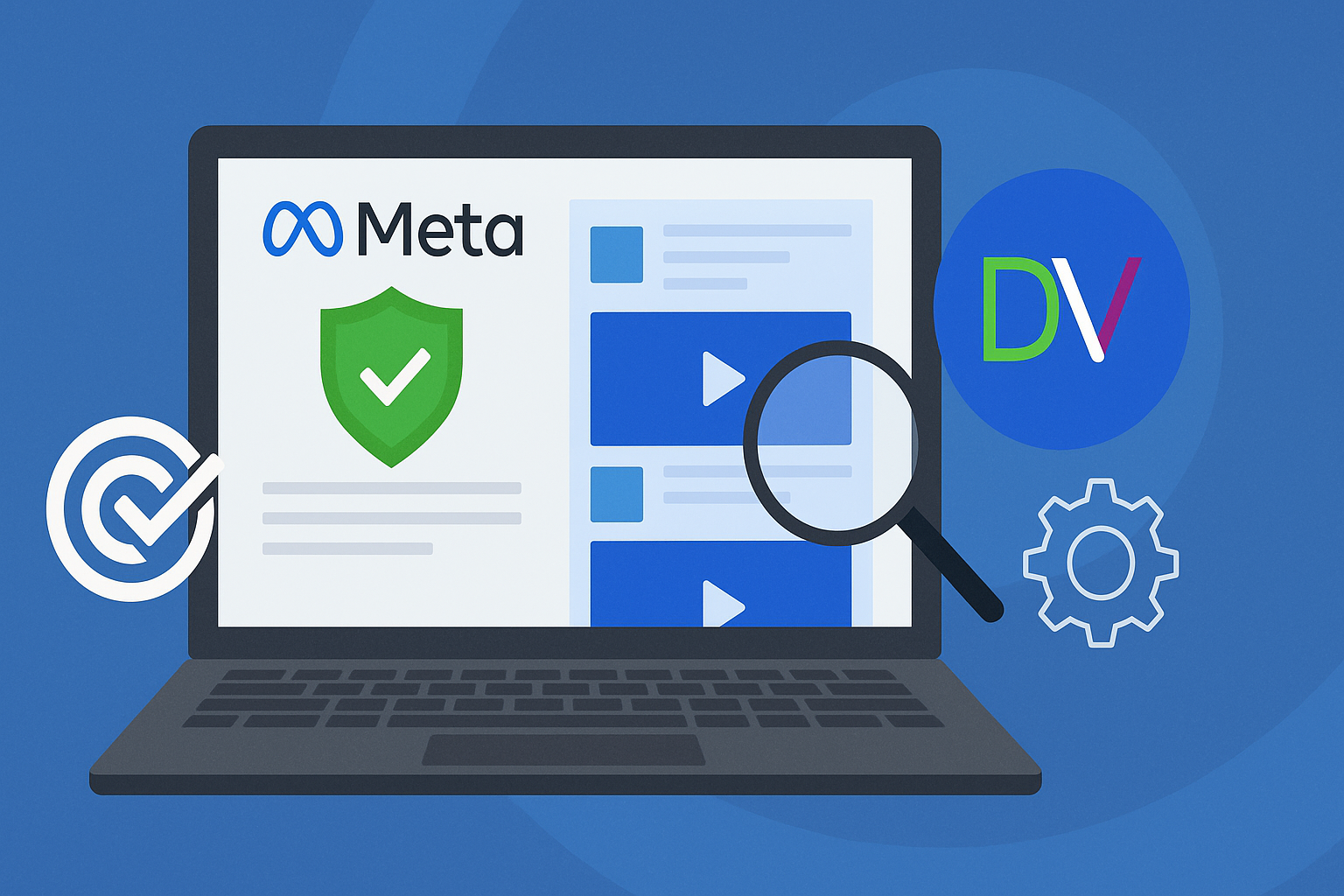
Meta brand suitability controls are taking a major leap forward with the platform’s expanded partnership with DoubleVerify. This latest integration introduces advanced brand safety tools across Facebook and Instagram, giving advertisers enhanced control over the context in which their ads appear. For businesses frustrated by the lack of transparency in Meta’s advertising ecosystem, this development signals a much-needed shift toward greater control, insight, and accountability. As online brand reputation becomes increasingly fragile, Meta is responding with tools that help ensure campaigns appear in suitable, safe, and relevant environments. This update is not just a technical change; it is a strategic improvement to how digital advertising operates on Meta platforms.
The inclusion of DoubleVerify’s suitability technology directly within Meta’s systems means advertisers can now manage brand suitability controls at the campaign level with far more accuracy and ease. Businesses can tailor ad placement to avoid sensitive or controversial content, reducing the risk of unintended associations. This is particularly vital for industries like finance, healthcare, and retail, where public trust plays a central role in long-term success. Meta brand suitability controls now offer protection by enabling users to exclude categories such as inflammatory political content, violence, or other problematic material based on specific suitability profiles. This avoids over-blocking or under-blocking, a common frustration for advertisers using outdated or overly rigid systems.
A critical advancement in this update is the alignment of Meta brand suitability controls with the Global Alliance for Responsible Media (GARM) framework. GARM provides a global set of standards for classifying harmful content, and by incorporating these guidelines, Meta gives advertisers the ability to benchmark brand safety settings against an internationally recognised scale. DoubleVerify’s integration enables real-time content classification, which doesn’t rely on blunt keyword blocks but instead evaluates context and tone. This allows a news article covering sensitive topics in a responsible manner to be included in ad placements for some brands while being excluded by others. The flexibility and customisation provided by this system make it a significant leap forward in responsible, performance-driven advertising.
The evolution of brand suitability from a niche concern to a core campaign pillar reflects a broader shift in digital advertising. Traditional metrics like impressions and clicks are no longer enough; brands are now demanding campaign environments that align with their values and messaging. Meta brand suitability controls, empowered by DoubleVerify’s real-time technology, allow advertisers to monitor and control the context of their ad placements across Meta’s vast inventory. For business users who have long expressed frustration over unclear placement data and content adjacency, this partnership introduces a level of transparency that’s been sorely missing.
Beyond campaign protection, the improved controls serve as a strategic resource for advertisers trying to balance brand safety with performance. The added visibility and control can lead to smarter targeting, better creative choices, and more efficient use of ad spend. With Meta brand suitability controls in place, businesses no longer have to choose between reach and responsibility; they can have both. Real-time reporting and categorisation also give marketers the ability to quickly respond to shifts in media trends or public sentiment, making campaigns more adaptive and less vulnerable to reputational risk.
This integration also simplifies the advertising workflow. Instead of toggling between external tools or relying on retrospective reporting, advertisers can now apply and adjust brand suitability settings directly within Meta’s ad management systems. This seamless experience is particularly useful for agencies managing multiple clients, where consistency, speed, and scale are essential. Additionally, by automating much of the classification process, the system reduces manual labour and human error, freeing teams to focus on strategy and creative execution.
For UK-based businesses, where advertising standards and consumer expectations are particularly high, this development arrives at an opportune moment. The introduction of stricter local privacy laws, along with growing public awareness around misinformation and harmful content, has made contextual advertising more important than ever. Meta brand suitability controls offer UK advertisers the ability to comply with these standards while maintaining high campaign performance. As regulatory environments evolve, having built-in tools for brand protection becomes not just a benefit but a necessity.
Meta’s deeper commitment to brand safety through partnerships like this one with DoubleVerify signals a cultural shift within the company. After years of criticism regarding misinformation, hate speech, and toxic content, Meta is now taking tangible steps to help advertisers safeguard their investments. Importantly, the use of an independent, third-party provider adds credibility to these controls. Business users who have felt underserved or unsupported by Meta’s in-house tools now have an external benchmark they can trust. It positions Meta not just as a platform for growth, but as one that is taking meaningful responsibility for the digital spaces it curates.
The benefits of this system extend well beyond mere risk avoidance. Meta brand suitability controls are increasingly being used to create positive brand associations by allowing businesses to target contextually relevant content that enhances message resonance. Rather than just dodging harmful topics, advertisers can actively pursue environments that reinforce their brand values such as sustainability, diversity, or mental health awareness. In this way, suitability becomes not just about protection, but about strategic alignment and purpose-driven marketing.
Furthermore, the scalability of these new controls ensures that they’re effective for businesses of all sizes—from small enterprises looking to protect their brand image, to global corporations running multi-market campaigns. Meta’s infrastructure allows these tools to function across vast amounts of content and audiences, without sacrificing delivery speed or campaign effectiveness. This scalability makes it easier for advertisers to incorporate brand suitability into campaign planning from the start, rather than treating it as an afterthought or a reactive measure.
One of the most compelling aspects of Meta brand suitability controls is their real-time functionality. In a digital ecosystem that shifts by the minute, advertisers can’t afford to rely on outdated reports or slow approval processes. DoubleVerify’s technology allows for continuous monitoring, ensuring ads are paused or reallocated instantly when unsuitable content is detected. This prevents damage before it occurs and offers a higher degree of brand resilience. It’s a proactive approach that businesses have been calling for, and one that could dramatically reduce the reputational fallout from content adjacency missteps.
In an age where consumers expect brands to take clear ethical stances and maintain a strong public image, brand suitability is no longer optional it’s a central part of the marketing conversation. Meta’s investment in this area demonstrates an understanding that long-term advertiser trust depends on shared values and clear control. Meta brand suitability controls make it possible to maintain those values even at scale, and they do so in a way that’s flexible, intelligent, and easy to use.
In conclusion, the enhancement of Meta brand suitability controls through DoubleVerify is a meaningful development for advertisers looking to protect and elevate their brand. This integration offers new levels of control, transparency, and strategic opportunity, helping businesses deliver better campaigns in safer environments. As digital marketing continues to evolve, and as consumers hold brands to higher standards, these tools will become indispensable. For any business relying on Meta for growth, the ability to control context is no longer a luxury—it’s a fundamental part of doing responsible, effective advertising.