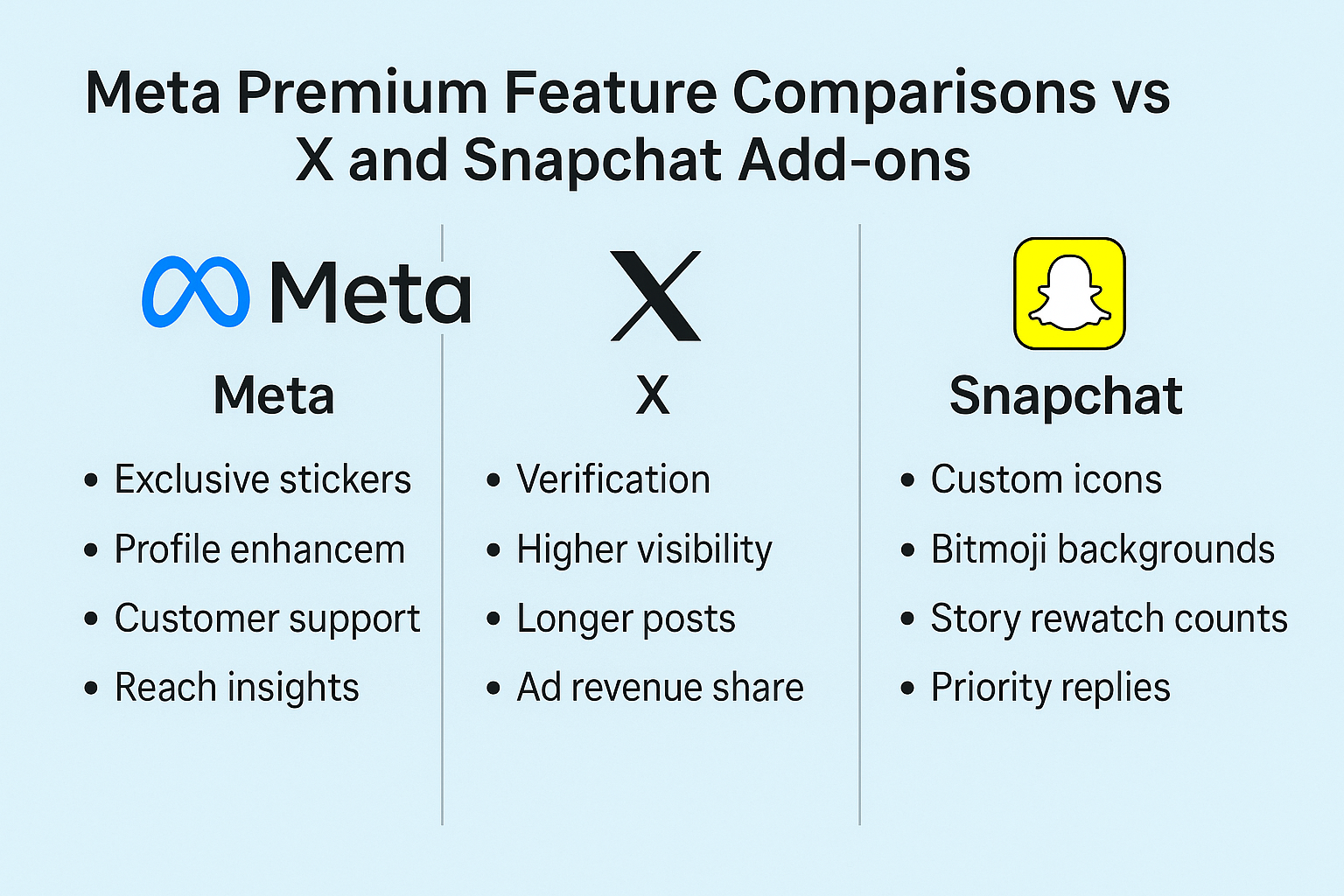
Meta Premium Feature Comparisons vs X and Snapchat Add-ons
In today’s increasingly monetised social media landscape, Meta premium feature comparisons are becoming essential for businesses looking to make informed decisions about where to invest. As Meta rolls out its expanded suite of subscription features for Facebook and Instagram, it enters the same premium tier space occupied by X (formerly Twitter) and Snapchat. These platforms have all moved towards recurring revenue models by introducing feature-rich premium subscriptions. But what do these paid perks offer businesses, and how do they stack up against each other?
Meta’s latest move into the premium tier began with Meta Verified, a subscription that offers verification, enhanced visibility, and customer support. While originally aimed at creators and influencers, the growing range of features now includes exclusive stickers, improved analytics, and profile enhancements. These developments make Meta premium feature comparisons even more relevant as small businesses and marketers weigh whether the cost translates into measurable value. The monthly fee, set at around £9.99 via web and £11.99 in-app, puts it on par with similar offerings from X and slightly above Snapchat’s price point, prompting a closer look at how these services differ in substance.
On the other side of the battlefield, X Premium offers a tiered subscription model, with options ranging from Basic to Premium+. Each tier delivers a specific blend of perks: verification badges, longer posts, improved algorithmic placement in replies, and even revenue sharing. For content-heavy brands and thought leaders, this model can be attractive, especially if the goal is to monetise posts directly. However, in this shifting ecosystem, Meta premium feature comparisons show that Meta’s more cautious rollout may appeal more to business users seeking stability rather than rapid, experimental change.
Meanwhile, Snapchat+ has carved out a different niche. With a modest subscription cost of around £3.99, it provides largely cosmetic upgrades—custom icons, Bitmoji extras, and priority features that enhance user interaction. While it’s not as business-centric as Meta or X, Snapchat+ has gained traction among Gen Z users and visual-first brands. That said, in terms of direct business tools or insights, it falls short. For this reason, Meta premium feature comparisons become crucial when assessing platform utility beyond surface-level perks.
Meta’s premium direction seems to sit between Snapchat’s playful approach and X’s creator-centric revenue model. What sets it apart is a new focus on customer service a longtime pain point for Facebook and Instagram business users. Verified subscribers now receive access to human support, a significant upgrade from the automated systems that have long frustrated users. In Meta premium feature comparisons, this commitment to better service becomes a notable advantage. For brands handling frequent ad spend or account issues, this alone may justify the monthly cost.
Another critical angle in Meta premium feature comparisons is the quality of insights and analytics. Meta is testing advanced tools that give subscribers deeper views into their content’s performance and reach. This addresses a growing concern among marketers about the ever-decreasing organic reach and algorithm-driven suppression. Where X’s premium plans offer more visibility but less business-specific data, Meta’s evolving analytics tools could fill a vital gap for performance-focused campaigns, especially among SMEs who need strategic feedback without additional ad spend.
However, questions remain about how long these tools will remain gated behind a paywall. Meta’s pattern of testing features with premium users often leads to broader adoption or sudden withdrawal, making it difficult for businesses to plan long-term strategies. This uncertainty underlines the importance of Meta premium feature comparisons, especially for companies investing time and money into platform-specific growth. Should the features become permanent value additions, Meta’s premium package could transition from a nice-to-have to a business essential.
It’s also necessary to address the general sentiment towards Meta. Unlike Snapchat, which carries a lighter tone, or X, which has cultivated a loyal (if controversial) creator base, Meta has seen pushback due to algorithm changes, ad prioritisation, and data concerns. Businesses, particularly in the UK, are cautious. For Meta’s premium features to truly take hold, the company will need to offer transparency and sustained value. Meta premium feature comparisons will help businesses maintain realistic expectations, particularly around support, verification, and analytics areas where Meta has made promises in the past without always delivering on them.
Meta’s advantage lies in its infrastructure. Facebook and Instagram still offer superior reach, integrated ad systems, and robust business tools. When you weigh up Meta premium feature comparisons, these built-in advantages start to tip the scale. Unlike X, which is still rebuilding its ad credibility post-rebrand, or Snapchat, which remains niche, Meta’s broader ecosystem supports everything from shopping to video to community building. If premium subscriptions unlock even greater tools within this network, the potential upside for paying users increases significantly.
Business users also need to consider scalability. Can these features support brand growth over time? Meta premium feature comparisons suggest that while X may suit media personalities and Snapchat helps with younger consumer outreach, Meta sits in the middle—offering both serious business infrastructure and growing user engagement tools. This balance makes Meta particularly suitable for SMEs that can’t afford to experiment but need reliable ROI on marketing spend.
Of course, not all users will see the value straight away. Some features still feel experimental, and others might only benefit accounts that already perform well. Meta will need to be mindful of creating a platform where paid features don’t just widen the gap between large brands and newcomers. Until then, Meta premium feature comparisons will remain vital for small businesses weighing up whether they should jump into the subscription tier or focus elsewhere.
It’s also worth noting that Meta’s move into subscriptions doesn’t replace advertising but rather supplements it. The core monetisation still hinges on ads, but by adding subscriber tools, Meta opens new channels for creators and businesses to enhance their presence without being entirely dependent on paid boosts. In practical terms, Meta premium feature comparisons help marketers evaluate whether the blend of support, visibility, and profile enhancements justify the expense when combined with ongoing ad strategies.
Over the coming months, Meta’s expansion into premium tools is likely to evolve further. Feedback loops from early adopters, performance metrics, and competitive pressure from X and Snapchat will all play a role in shaping the final form of these offerings. Businesses looking to stay ahead should monitor these changes closely, using Meta premium feature comparisons to regularly re-evaluate the best platform investments for reach, engagement, and conversion.
In conclusion, the landscape of social media subscriptions is still taking shape. While X focuses on monetisation and visibility, and Snapchat prioritises customisation and novelty, Meta aims to balance both creator tools and business essentials. Human support, verified identity, and richer analytics give it a distinct appeal, particularly for businesses looking to strengthen their platform presence. But whether these features offer long-term value or just short-term sparkle depends on how well Meta executes its promises and adapts to user needs.
So for marketers, creators, and business owners seeking smarter ways to grow online, Meta premium feature comparisons provide a practical framework to make sense of these evolving digital tools. The platforms may continue to change, but strategic thinking and a close eye on what’s truly useful will remain the most valuable resource of all.