Facebook Ad Targeting Changes Explained for Business Advertisers
In a move that reflects the ongoing evolution of digital advertising, Meta has once again refined the options available for advertisers across Facebook and Instagram. These Facebook ad targeting changes are part of a broader strategy to balance user privacy, regulatory compliance, and advertiser needs. For businesses, especially those that rely on highly targeted campaigns to reach niche audiences, this adjustment could represent both a challenge and an opportunity, depending on how effectively they adapt to the shifting landscape of social media marketing.
For many years, Facebook’s advertising platform has been hailed as one of the most sophisticated in the industry. With the ability to target audiences based on interests, demographics, behaviours, and detailed personal attributes, businesses could achieve remarkable levels of precision in their campaigns. However, such precision has come under scrutiny from privacy advocates, regulators, and even users who have grown increasingly aware of how much personal data is harvested and utilised. This is why Meta has now decided to remove certain detailed targeting categories that it deems too sensitive or potentially invasive.
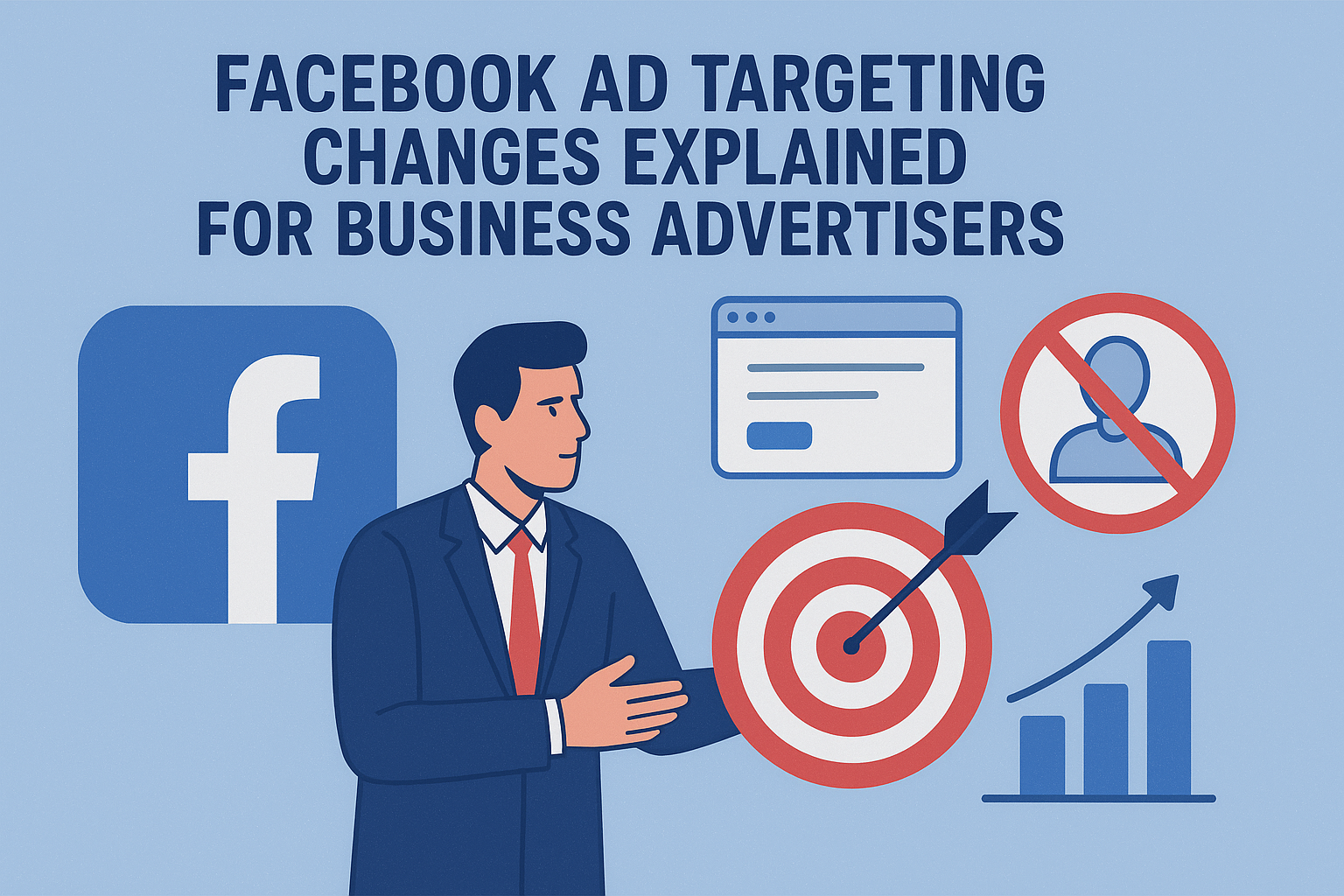
The most notable aspect of these Facebook ad targeting changes is the elimination of audience segments linked to sensitive topics, such as health, race, religion, political affiliations, and sexual orientation. Although Meta has previously taken steps to limit targeting based on these attributes, the latest update extends restrictions even further. The company argues that removing these options reduces the risk of advertisers misusing personal information in ways that could cause harm or perpetuate bias. In particular, advertisers in industries such as healthcare, politics, and advocacy may feel the greatest impact, as these were the sectors most reliant on granular segmentation to connect with very specific groups of people.
From a business perspective, the question is what these changes mean in practical terms. Advertisers will no longer be able to zero in on audiences with the same degree of specificity, which means strategies must be reconsidered. Instead of targeting narrow categories, businesses are encouraged to broaden their reach and rely on Meta’s machine learning systems to deliver ads to the most relevant users. This represents a significant shift in control, as it places more trust in Meta’s algorithms rather than allowing advertisers to define every detail of their target audience. For many companies, this will require a change in mindset, moving away from traditional demographic targeting towards a reliance on creative content, compelling messaging, and broader audience pools.
It is also worth noting that while detailed targeting options are being removed, other tools remain available to advertisers. Custom audiences built from first-party data, such as customer email lists or website visitors, are still valid and may become even more crucial in campaign planning. Lookalike audiences, which allow businesses to reach people who share characteristics with their existing customers, continue to play an important role. Furthermore, contextual targeting, where ads are matched to relevant content rather than user profiles, is gaining renewed attention in light of stricter privacy regulations. In short, while some doors are closing, others remain open for businesses willing to adjust their strategies.
The Facebook ad targeting changes should also be seen in the context of wider industry developments. Regulatory pressure, particularly in Europe under GDPR and in the United States with growing calls for stricter privacy laws, has forced tech companies to rethink their practices. Apple’s App Tracking Transparency framework has already limited the ability of apps to track user activity across devices, disrupting traditional advertising models. Google, too, is phasing out third-party cookies. Against this backdrop, Meta’s decision is less of a surprise and more of a necessary adaptation to avoid further criticism and regulatory intervention.
For businesses, the path forward lies in creativity and resilience. It is no longer enough to rely solely on micro-targeting to achieve results. Instead, advertisers should focus on producing authentic, engaging content that appeals to broader audiences. Investing in brand storytelling, strong visuals, and emotionally resonant messages will help campaigns succeed even in a more restricted targeting environment. At the same time, businesses should invest in strengthening their first-party data strategies, ensuring they can continue building meaningful relationships with their audiences without overreliance on third-party data.
In conclusion, the Facebook ad targeting changes represent a significant adjustment for businesses that depend on Meta’s platforms for advertising. While the removal of certain detailed options may initially feel restrictive, it also provides an opportunity to shift towards more ethical, creative, and sustainable strategies. By embracing broader targeting methods, leveraging first-party data, and trusting in Meta’s machine learning tools, advertisers can still achieve strong outcomes. Ultimately, these changes underline the fact that in digital marketing, adaptability is key, and those who evolve their approaches will continue to thrive in an environment where user privacy and trust are becoming paramount.