Automated Ads Explained: How Businesses Can Use Facebook Automation Effectively
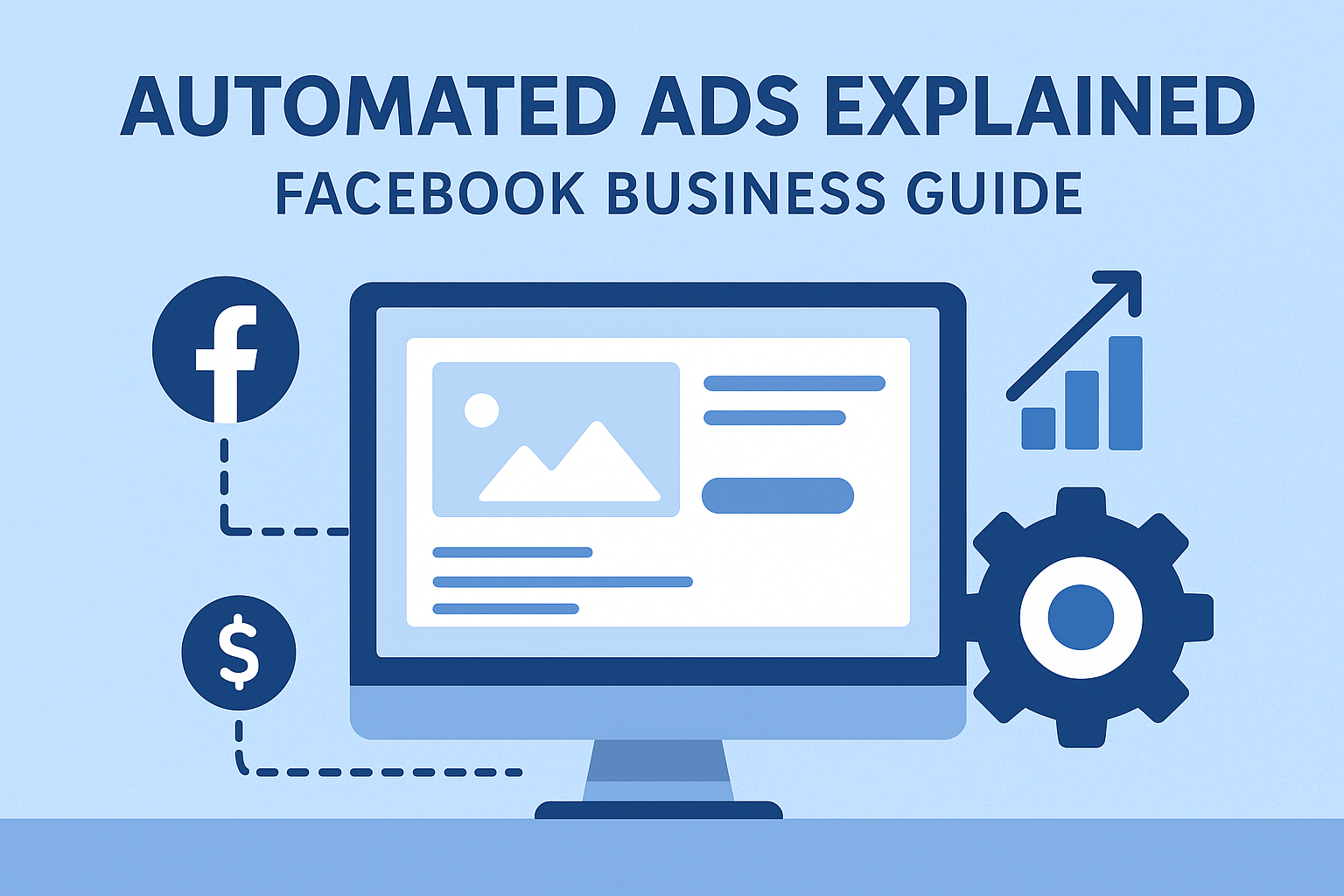
In today’s fast-paced digital marketing world, understanding automated ads explained is essential for any business looking to optimise its Facebook advertising campaigns. Automated ads are designed to simplify the advertising process, allowing businesses to create, target, and manage campaigns with minimal manual input. By leveraging Facebook’s ad automation tools, businesses can ensure their ads reach the right audience, at the right time, without constant monitoring. For UK companies struggling with Facebook’s complex ad interfaces, automated ads offer a practical solution that combines efficiency with data-driven decision-making.
Automated ads operate by analysing your business objectives and audience behaviour to generate campaigns that are optimised for performance. When setting up an automated ad, businesses input key details such as budget, campaign goals, and audience preferences. The system then uses machine learning algorithms to determine the best combination of creatives, targeting options, and placements. This intelligent approach ensures that businesses, whether small startups or established enterprises, can achieve better results without requiring advanced marketing expertise.
One of the primary advantages of automated ads is the ability to save time while maintaining precision. Traditionally, businesses would need to manually create multiple ad variations, split-test different audiences, and continuously monitor performance metrics. Automated ads eliminate much of this labour-intensive process by dynamically adjusting campaigns based on real-time data. For example, if certain ad formats or targeting strategies are performing better, the system automatically allocates more budget to those ads, maximising return on investment.
Another critical aspect of automated ads is their scalability. For businesses operating in the UK and beyond, running multiple campaigns across various regions can be a logistical challenge. Automated ad systems are capable of managing multiple campaigns simultaneously, adjusting strategies for each market segment without requiring manual intervention. This means that companies can focus on other areas of growth, such as product development or customer service, while their advertising continues to operate efficiently.
It is important to note that while automated ads provide significant benefits, businesses should still maintain oversight. Understanding includes recognising the importance of reviewing performance reports, monitoring ad creatives, and occasionally refining audience parameters. Automation does not entirely replace human judgement; instead, it enhances it by providing actionable insights and removing repetitive tasks. By striking a balance between automation and hands-on management, businesses can achieve optimal campaign outcomes.
For UK businesses looking to stay competitive, the use of automated ads is increasingly becoming a necessity rather than a luxury. Facebook’s algorithms are continuously evolving, and automated systems are designed to keep pace with these changes, ensuring that businesses are not left behind. By integrating automated ads into their marketing strategy, businesses can drive engagement, increase leads, and ultimately boost sales, all while reducing the workload on marketing teams.
In conclusion, understanding is vital for any business aiming to maximise its presence on Facebook. These tools offer an efficient, scalable, and data-driven way to run advertising campaigns, allowing businesses to reach their target audience effectively while saving valuable time. To gain further insights, expert advice, and practical solutions for Facebook advertising issues, UK businesses can visit our dedicated support hub at fixfb.co.uk and explore how to optimise campaigns and overcome challenges effectively.