Meta EU Political Ads Banned Under New Regulations This Week
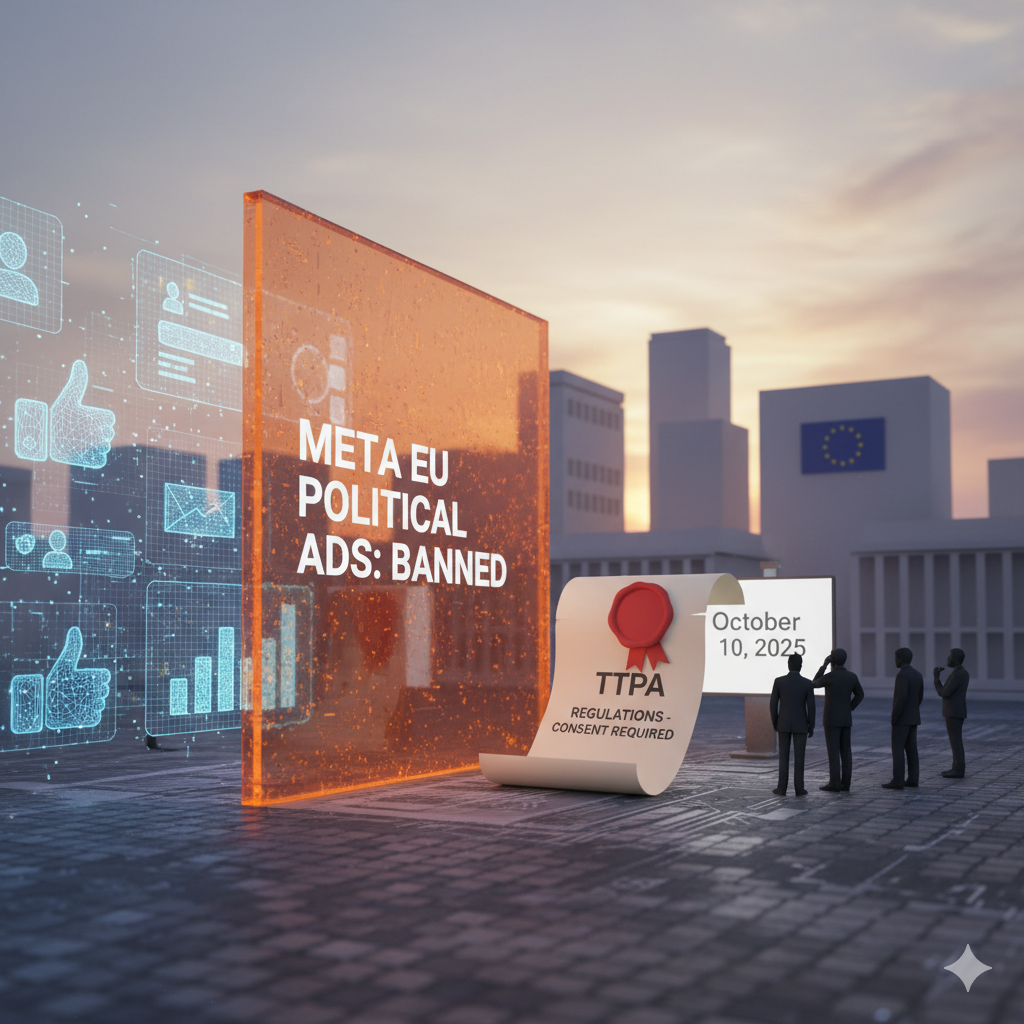
Meta EU political ads are no longer permitted across the European Union as of this week, marking a significant shift in how businesses and political campaigns can operate on the platform. The move comes in response to the EU’s new Transparency and Targeting of Political Advertising (TTPA) regulations, which demand explicit consent from every user before their data can be used for political, electoral, or social issue advertising. Meta has confirmed that implementing these rules at scale is not feasible, leading to a complete halt of all related campaigns in the EU. For businesses and advertisers reliant on these platforms, this change represents both a logistical and strategic challenge that must be addressed immediately.
The European Union’s TTPA legislation introduces stringent requirements around user data and transparency, effectively making it impossible for Meta to continue political advertising without exposing itself to legal uncertainty. By requiring platforms to secure separate and explicit consent from each user for their data usage, the EU aims to ensure that political and social issue advertising operates under full transparency. Meta, citing the complexity of complying with these regulations, decided that suspending these ads was the only viable course of action. The new rules officially came into effect on October 10, 2025, but Meta began the ad restrictions earlier in the week, giving EU advertisers very limited time to adapt.
From a business perspective, the cessation of Meta EU political ads has far-reaching implications. Companies that previously used the platform to reach audiences with politically themed campaigns must now reassess their advertising strategies, turning to alternative channels or refining campaigns to focus on non-political content. The impact is not only operational but also financial, as advertising budgets allocated to political ads will need to be restructured. Additionally, any third-party tools or APIs used to automate or optimise such campaigns will require immediate updates to align with the new restrictions. Businesses must also be aware that these changes only affect the EU, meaning global campaigns outside the European Union can continue, but segmentation and targeting strategies may need adjustment to avoid accidental violations.
Meta’s decision also underscores the ongoing tension between large tech companies and regulatory authorities. Historically, Meta has opposed what it sees as overreach by EU regulators, arguing that the rules impose an untenable burden on platforms and advertisers alike. The company had previously sought intervention from the US government to push back against these regulations, but no relief has been granted. Consequently, Meta finds itself complying with a law that significantly alters its European advertising operations while still providing full political ad capabilities in other regions. For UK businesses, this development is particularly relevant as it highlights the potential for future regulatory changes that could affect local digital advertising practices.
For advertisers seeking to navigate this new landscape, understanding the limitations imposed by Meta EU political ads restrictions is crucial. While political, social issue, and electoral campaigns are now prohibited on the platform in the EU, businesses can still leverage Meta’s other advertising tools, such as targeted non-political content, to maintain engagement with audiences. Clear communication with audiences and a re-evaluation of campaign strategies are essential to mitigate the disruption caused by these regulatory changes. Moreover, staying informed about evolving EU legislation and potential updates from Meta will help businesses remain compliant while maximising their advertising effectiveness.
In conclusion, Meta EU political ads have been effectively banned due to the EU’s new transparency and targeting rules, marking a major development for advertisers across Europe. Businesses relying on political and social issue campaigns must act swiftly to adapt their strategies and ensure compliance with these regulations. While the restrictions present challenges, they also offer an opportunity for companies to rethink their approach to digital marketing, focusing on transparency, audience engagement, and non-political content. Understanding the implications of these changes and proactively adjusting campaigns is now essential for any EU-based business using Meta’s platforms.