How the Meta AI Reshuffle is Transforming Staff Roles and Data-Centre Investments
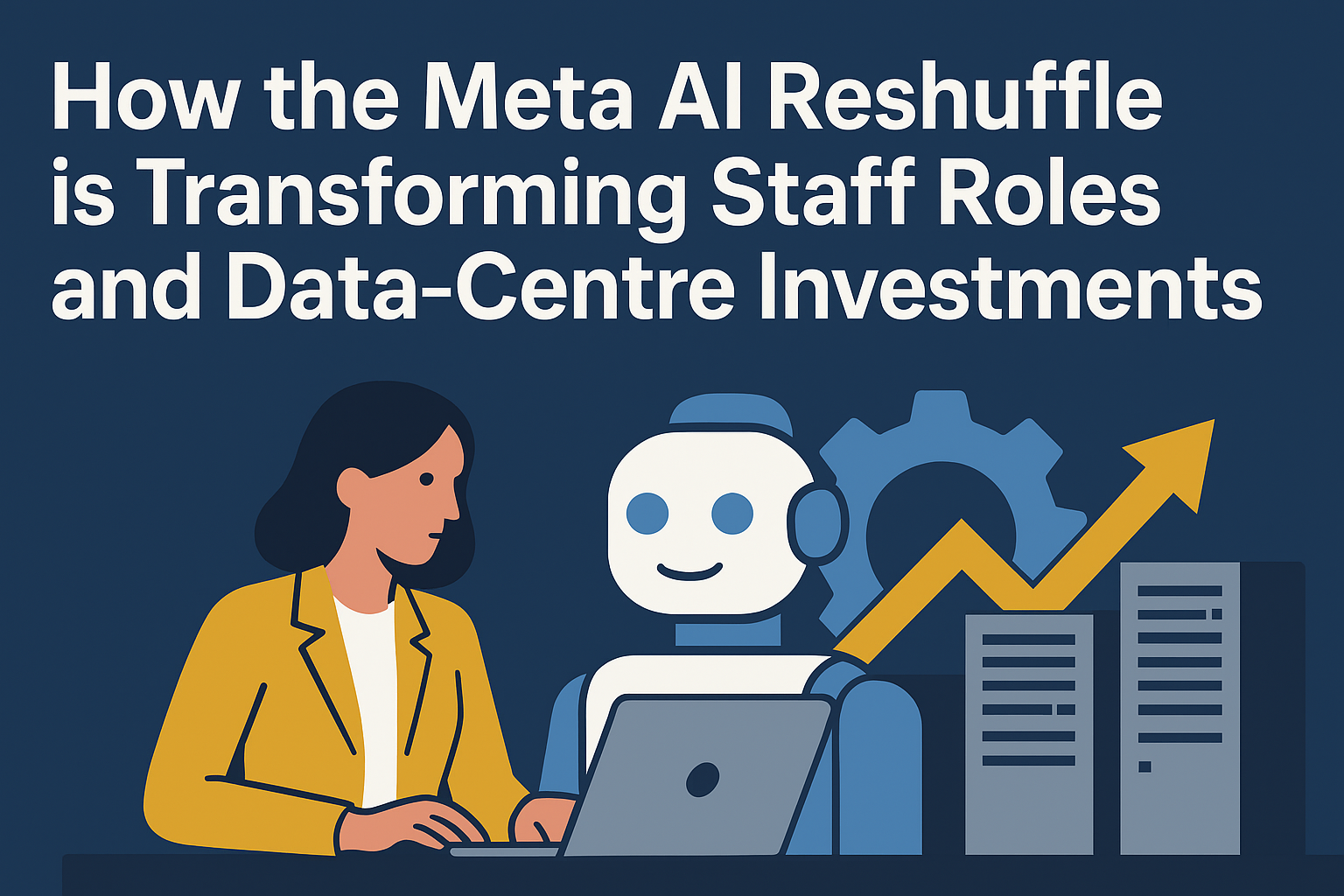
In recent news, the key phrase Meta AI reshuffle has become central to understanding how Meta Platforms is re-structuring its business. According to a report by Social Media Today, Meta has begun replacing certain mid-level engineers and risk-division staff with AI-powered technology, while simultaneously escalating investment in huge data-center build-outs. For business users and advertisers working with Facebook or Instagram through Meta, the implications of this Meta AI reshuffle are considerable and warrant careful analysis.
The article outlines that Meta’s chief compliance and privacy officer of product informed members of its risk organization that “we don’t need as many roles in some areas as we once did” because automated processes are replacing manual reviews. Meanwhile, Meta is investing heavily in what it calls “Superintelligence Labs” and has entered a joint-venture funding arrangement with Blue Owl Capital for data-center projects. From the expert point of view we can say that this Meta AI reshuffle communicates a two-fold strategy: one of cost and process optimization, and one of infrastructural dominance. (Social Media Today)
For business users reliant on Meta’s platforms, the Meta AI reshuffle has several direct consequences. First, if Meta is automating roles previously responsible for content moderation, risk review, and possibly ad-quality evaluations, then the turnaround times, criteria, and transparency of decisions may change. The Meta AI reshuffle means that what were human checks become algorithmic ones, creating both scale and risk of opacity for advertisers. Secondly, the heavy pre-investment in new data-centers suggests Meta expects AI-driven insights and tools to drive its next wave of ad-product differentiation. For a business user, this means that ecosystem changes (in bidding algorithms, campaign automation, ad review) might accelerate as part of the Meta AI reshuffle.
From an expert perspective, there are broader strategic implications. The Meta AI reshuffle may be less about simply cutting costs and more about aligning Meta’s workforce for greater agility and embedding AI deeply into its operations. As the article notes, the job reductions might be about “streamlining decision-making” rather than purely cost-saving, and by building state-of-the-art, multi-gigawatt data-centers, Meta is setting itself up for the compute-intensive future of AI. This suggests business users need to be aware of Meta’s changing engine behind its social-ad machine: one that AI, data centers, and scale increasingly drive.
In conclusion, the highlights a notable shift for any business engaging with Meta’s platforms. Whether you are managing campaigns, analysing audience behavior, or relying on Meta’s infrastructure for customer reach, the signals that the underlying platform architecture and processes are evolving substantially. My advice: stay alert to changes in ad review times, automation features in Meta Ads, and any new AI-powered tools Meta introduces. Understanding the Meta AI reshuffle will give business users who depend on Meta’s systems a strategic advantage.