Facebook Account Viewer Tools Explained: Safe and Real Options
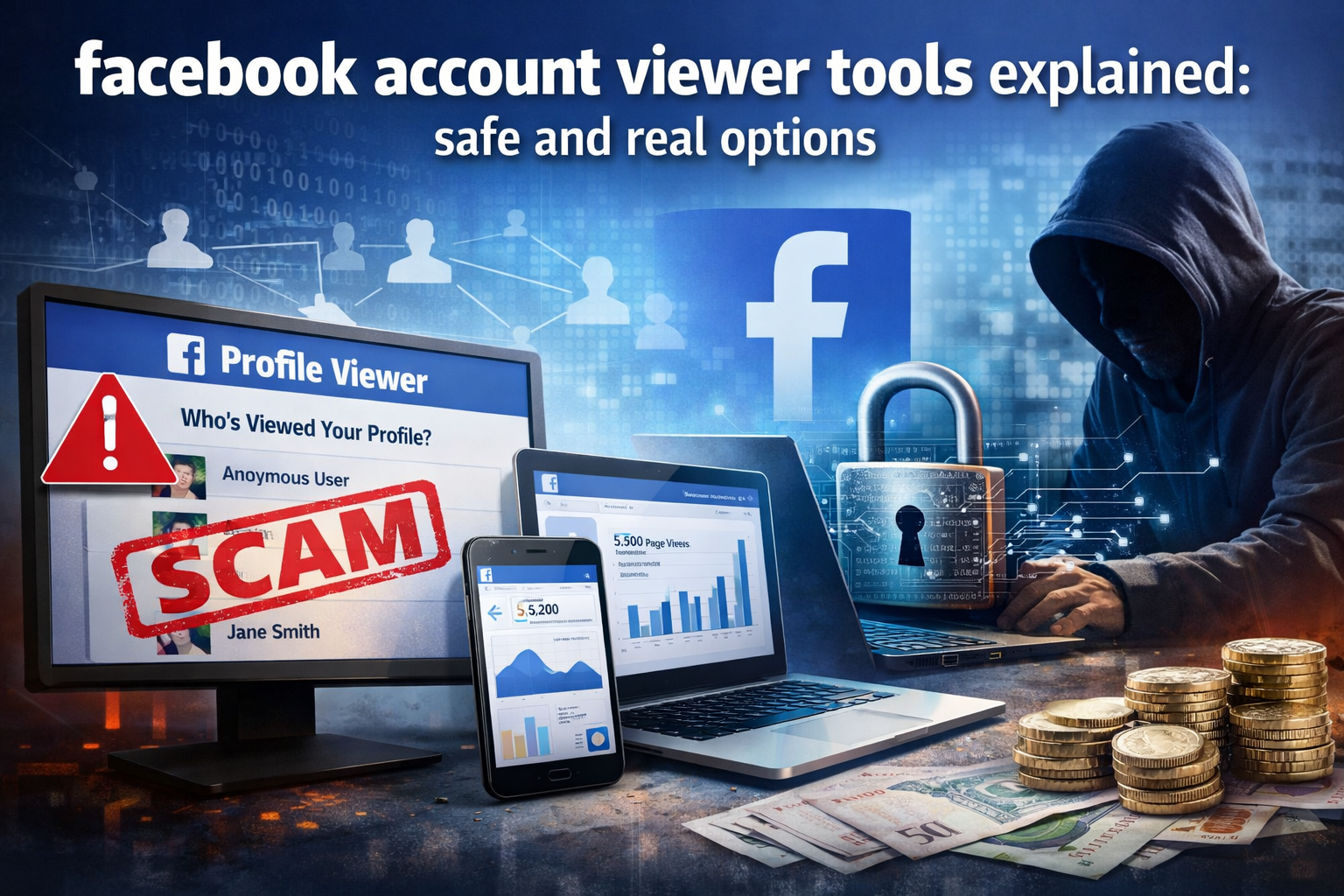
In the world of social media, there’s a persistent and misleading phrase that circulates online: Facebook account viewer tools. This term is used by countless websites, videos, and apps that claim to let you discover who has viewed your Facebook profile, but the simple fact is that such tools do not genuinely exist, and Facebook itself does not provide a feature that lets you see who has visited your personal profile. Despite the appeal of knowing exactly who has been looking at your account, this functionality is not supported by Meta’s platform, and any third‑party service claiming to offer it should be approached with extreme caution.
The core reason behind this is that Facebook prioritises user privacy. Revealing who viewed a profile would fundamentally change how people interact on the platform and could easily be misused for stalking, harassment, or unwanted attention. Facebook has repeatedly stated that there is no official feature to show profile visitors and that no legitimate third‑party application can access this data, because it’s not part of the platform’s API or user data that is exposed.
Nevertheless, the internet is full of apps, extensions and websites labelled as “Facebook account viewer tools”, “profile viewer apps” or similar. In most cases, these services are scams designed to trick users into handing over their login credentials, granting invasive permissions, or downloading malicious software. The techniques these sites use are often simple psychological tricks, generating fake lists of names that may include some of your friends or people you recognise, creating the illusion that the tool works. There’s no real connection to your profile activity; the names shown are usually pulled from your friend list or guessed using superficial data.
The most dangerous aspect of these so‑called Facebook account viewer tools is the risk they pose to your account and personal information. If you enter your Facebook login details into a third-party site, you could be giving attackers full access to your account. This can lead to account takeover, unauthorised posts or messages being sent from your profile, and the harvesting of your contacts’ information. Some of these applications contain malware that installs spyware on your device or steals private data, and reports from security researchers have identified thousands of malicious apps disguised as useful tools.
It’s not just obvious scam websites that you need to watch out for. Some of these tools are distributed through official app stores, posing as profile viewer utilities or games that ask you to log in with Facebook credentials. Once you authorise access, the app may request broad permissions that allow it to see and export your personal information far beyond anything needed for the promised “feature”. This is why it’s essential to manage the apps connected to your Facebook account and revoke access for any you don’t recognise or trust, using Facebook’s own settings.
From a legitimate perspective, while there is no way to see precisely who has viewed your Facebook account, there are official insights that can show engagement with your content. For business pages or professional profiles, Facebook’s Page Insights and Meta Business Suite provide robust analytics about page views, reach, demographics, and interactions. These tools help you understand how audiences are responding to your posts, how many people have seen your content, and where those viewers are located, without compromising privacy or violating platform policies. These analytics are especially valuable for businesses looking to optimise their social strategy.
For individual users, the only Facebook feature that reveals specific viewers is the story viewer list. When you post a Facebook Story, the platform shows you who has viewed it and this can include people who are not actually your friends if the story is set to public. However, this is very different from a profile viewer, because stories are ephemeral and designed to show direct interaction with that piece of content, rather than a general visit to your profile page.
It’s worth highlighting that the notion of a Facebook account viewer tool has been around for many years, and different scams have appeared repeatedly. Even though some online communities continue to debate whether such apps ever worked or might work under professional modes or special settings, there’s no evidence that Facebook has ever provided a feature that reliably tracks profile visitors. Any claims to the contrary are rooted in myth or misunderstanding of how the platform’s engagement metrics actually function.
For UK businesses and professionals, the legal and reputational risks of using dubious third‑party tools cannot be understated. Under data protection regulations such as the GDPR, handing sensitive data to unverified providers could expose you to compliance issues, and compromised business accounts can damage customer trust. The safest approach is always to rely on official Meta tools and verified analytics rather than enticing but fraudulent “Facebook account viewer tools”.
In conclusion, while the idea of a Facebook account viewer tool that shows exactly who has visited your Facebook profile is alluring, it remains nothing more than an internet myth propagated by scam artists. Facebook does not offer this feature, and there is no legitimate way to access profile viewer data. Third‑party apps and websites that claim to provide this functionality are deceptive, potentially harmful, and pose significant privacy and security risks. Instead, use Facebook’s built‑in analytics and engagement metrics to gauge interest from your audience and manage your privacy settings to control who sees your content. By staying informed and cautious, you can protect your account, comply with data protection laws, and focus on meaningful interaction without falling for misleading tools.