Meta AI Reels Translation Expands Global Reach for Businesses and Creators
Meta AI Reels translation has taken a significant step forward with the addition of new languages, reshaping how creators can engage global audiences and break down language barriers on Facebook and Instagram. With Meta AI Reels translation now supporting a broader set of languages beyond its original roll-out, business users and content creators should be acutely aware of how this evolving feature can expand their reach and influence within international markets.
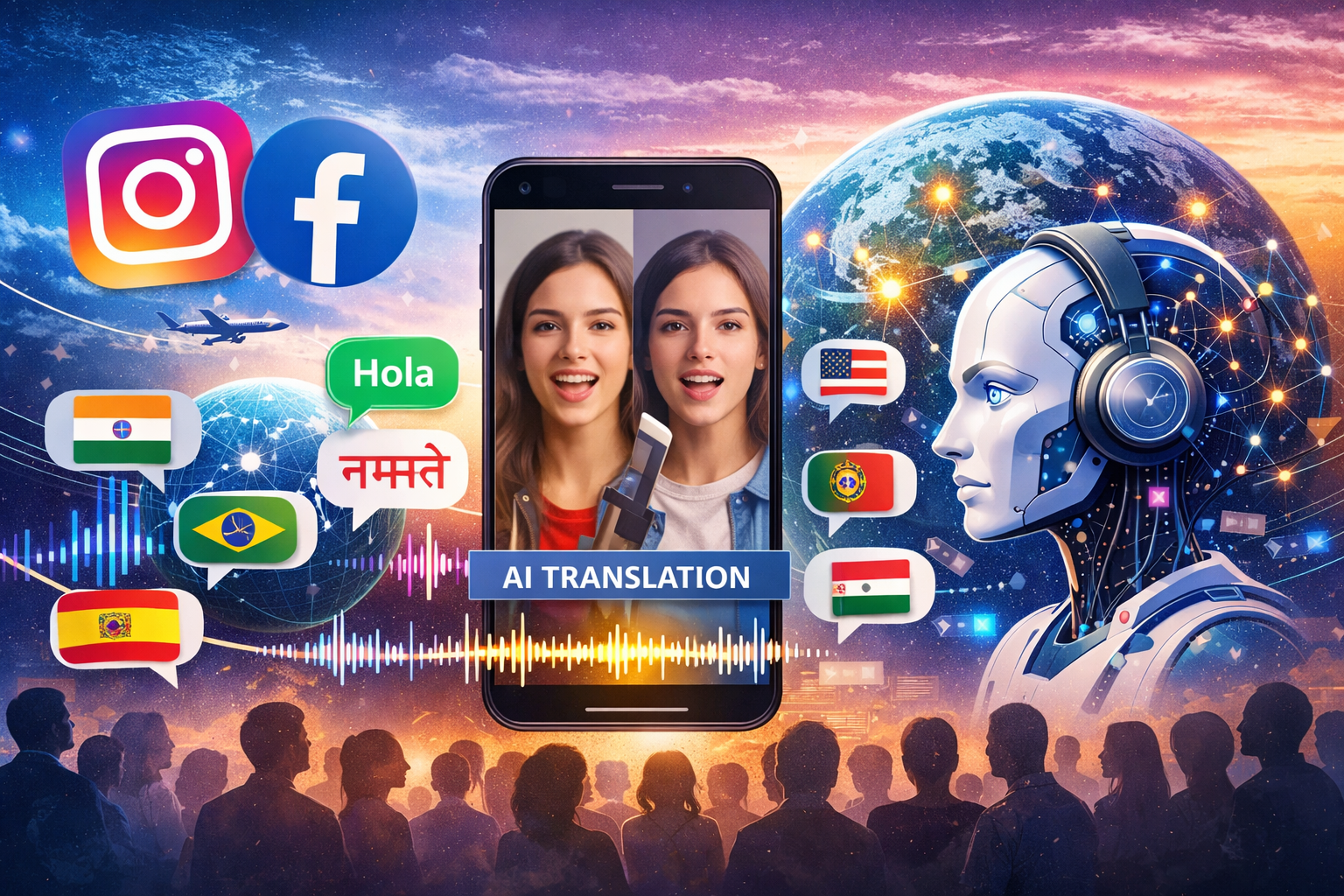
When Meta first launched AI translation features for Reels, the functionality was limited to English and Spanish, with automatic dubbing and optional lip-syncing powered by artificial intelligence that mimicked the creator’s voice tone and cadence. This early iteration already marked a powerful change in how short-form video content could be understood by audiences speaking different languages. The expansion of Meta AI Reels translation to include languages such as Hindi and Portuguese in late 2025 immediately signalled a strategic pivot towards the world’s largest content markets, allowing creators from India, Brazil, and other regions to more effectively connect with audiences who previously might have encountered language barriers.
The latest update goes further, with Meta adding languages such as Bengali, Tamil, Telugu, Marathi, and Kannada to its AI translation options. This broader set of supported languages reflects Meta’s recognition of the vast linguistic diversity in some of its most engaged user markets, particularly India, which has become the single largest market for both Facebook and Instagram usage globally. By extending Meta AI Reels translation in this way, creators can now distribute content that is automatically dubbed and lip-synced into languages spoken by millions of users across South Asia, vastly increasing the potential reach of their Reels.
From an expert perspective, this evolution of Meta AI Reels translation presents a compelling opportunity for business users and social media strategists in the UK and beyond. Previously, creators faced substantial barriers when trying to engage non-English speaking audiences, often relying on manual translation, subtitles, or separate region-specific content strategies. With the improvements in AI-driven translation, Meta has effectively lowered the technical and logistical hurdles associated with global content distribution, democratizing access to multilingual performance that was once the preserve of larger media companies.
The way Meta AI Reels translation works is central to its appeal. The system uses machine learning to analyse the spoken audio in a Reel and generate a translated version that retains the creator’s vocal characteristics. When lip-syncing is enabled, it also aligns the translated audio with the creator’s mouth movements, creating a viewing experience that feels natural and culturally authentic rather than a disjointed overlay. For business users, this means that promotional content, product tutorials, expert insights, and thought leadership videos can now resonate more deeply with international audiences without the need for voice-over artists or third-party localisation services.
Importantly, the expanded Meta AI Reels translation remains freely accessible to eligible creators. Facebook creators with at least 1,000 followers and all public Instagram accounts in regions where Meta AI is available can turn on this feature, allowing them to publish translated content directly from within the app. This accessibility makes it a viable tool not only for established influencers but also for small business owners and rising creators who are looking to grow their brand presence globally without incurring additional translation costs.
For UK businesses that are investing in social media marketing, understanding how to leverage Meta AI Reels translation should now be part of forward-looking content strategies. As UK brands increasingly seek to engage audiences in markets such as India, South America, and parts of Africa and Europe, their ability to present video content in native languages can significantly influence discoverability, engagement metrics, and overall brand perception. Offering viewers the option to watch content in their own language removes friction in the user experience and signals inclusivity and cultural respect — qualities that often translate into stronger audience loyalty and greater conversion potential.
Another strategic advantage of this expanded translation capability is the analytics insight it can provide. By being able to see how content performs in different linguistic contexts, creators can refine their targeting, tailor future content plans, and allocate marketing resources more efficiently. For business users who rely on data-driven decision making, this integration of translation and performance metrics offers a deeper understanding of where language localisation is paying dividends and where additional optimisation may be required.
Of course, implementing Meta AI Reels translation effectively involves more than simply toggling the feature on. Creators need to be mindful of cultural nuances, local preferences, and the quality of translated content. While the AI strives to maintain natural diction and tone, it remains critical for creators to review how translated videos are received by audiences, as automated solutions will not always perfectly capture idiomatic expressions or contextual subtleties. Ongoing testing and audience feedback should therefore inform how brands use this tool in longer-term social media campaigns.
In conclusion, Meta AI Reels translation now supporting additional languages represents a landmark shift in social media capability, offering corporate and individual creators alike a powerful mechanism for global content distribution. For UK business users seeking to elevate their social media presence and outperform competitors in international SEO and engagement, embracing this feature is a smart move. As Meta continues to iterate on its AI translation tools, staying ahead of these developments and integrating them into strategic planning will be key to unlocking new markets, fostering deeper connections with diverse audiences, and achieving meaningful growth across borders.