Meta Q4 Revenue Growth Drives User Engagement and Advertising Opportunities
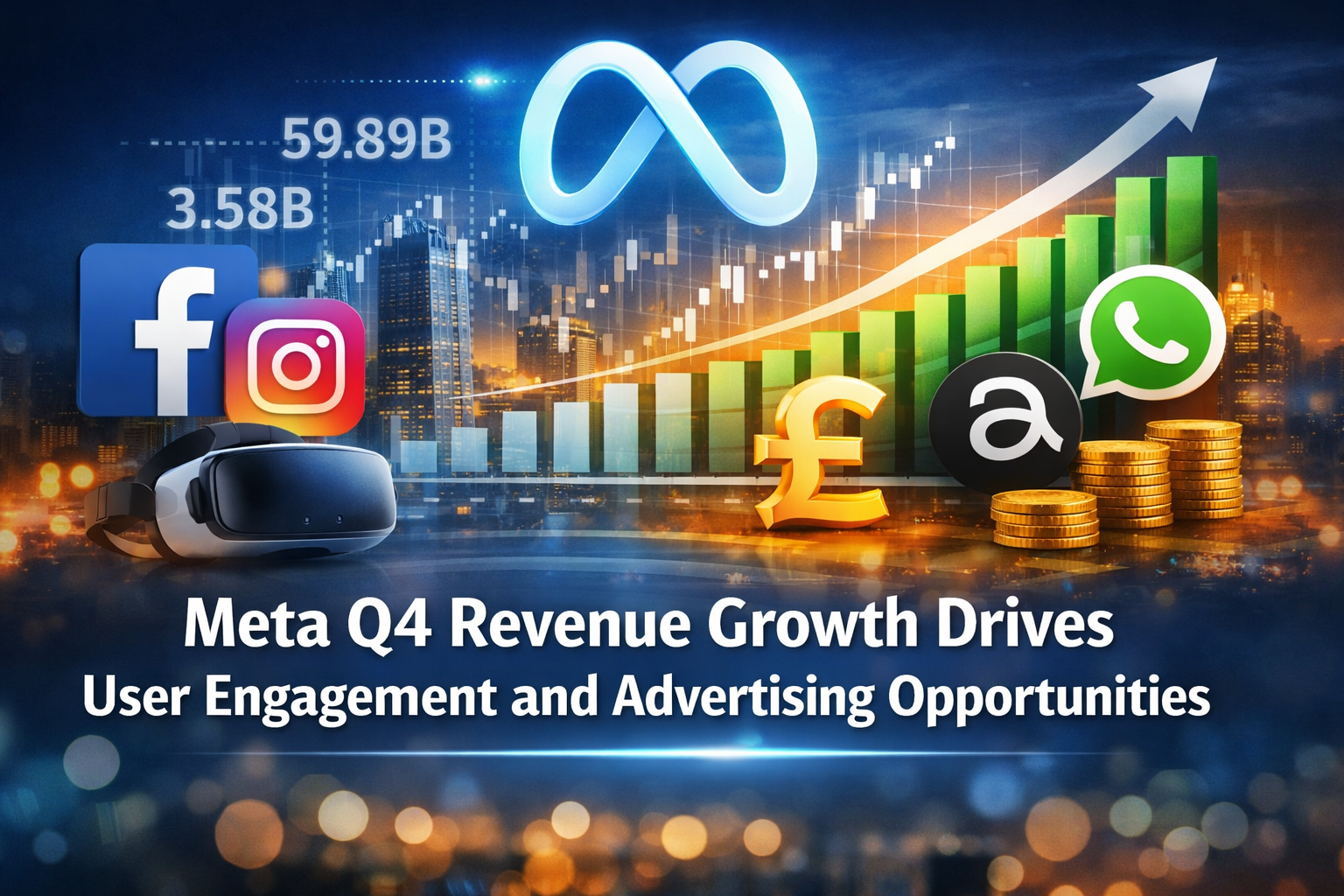
Meta Q4 revenue growth has captured the attention of business users and digital marketers across the UK, as the latest quarterly report highlights substantial increases in both user numbers and revenue. In Q4 2025, Meta added an impressive 40 million daily active users across its suite of applications, including Facebook, Instagram, WhatsApp, Messenger, and Threads, bringing the total to 3.58 billion daily active users. This growth underscores the continuing dominance of Meta in the social media landscape, reinforcing its ability to invest heavily in emerging technologies and long-term digital connectivity projects.
The surge in Meta Q4 revenue growth reflects the company’s robust advertising performance, particularly during the holiday period, which has consistently driven strong ad sales. Overall revenue for the quarter reached $59.89 billion, contributing to a full-year total of $200.97 billion. In addition to advertising, Meta has diversified revenue streams, including the expansion of Meta Verified subscriptions and the monetisation of Threads Ads, both of which have contributed to its overall financial performance. The “Other” revenue segment, boosted significantly by Meta Verified, has now reached $801 million, indicating growing adoption among paying users and a valuable supplementary income source beyond traditional advertising.
For business users relying on Meta platforms, understanding the dynamics of Meta Q4 revenue growth is critical. Increased user engagement translates to a larger potential audience for advertising campaigns, making it essential for marketers to strategically align ad spend with high-traffic periods and leverage new revenue channels such as Threads Ads. Additionally, the steady rise in Meta Verified subscriptions signals opportunities for businesses to engage with verified communities, offering a more secure and trusted environment for brand interactions.
While Meta continues to dominate in user numbers and revenue, its investments in emerging technologies, particularly within Reality Labs, illustrate a long-term vision that goes beyond immediate financial gains. Reality Labs, Meta’s VR/AR division, reported a $6 billion loss for the quarter, reflecting heavy investment in next-generation tech and infrastructure. Despite these losses, the potential applications in virtual reality, augmented reality, and advanced AI signal future opportunities for businesses that are early adopters of these platforms. Meta Q4 revenue growth, therefore, is not just a reflection of current advertising success but also an indicator of the strategic positioning that could reshape digital marketing and user engagement in the years ahead.
For advertisers and business users, the implications of Meta’s Q4 revenue growth extend beyond immediate metrics. As AI tools become increasingly integrated into platform functionality, including content moderation, ad targeting, and even VR environment creation, companies must adapt to a landscape where automation enhances efficiency but also demands expertise in utilising new digital tools. Meta’s focus on AI-driven development, combined with continued user growth, provides a dual advantage for businesses that are prepared to navigate these evolving channels effectively.
In conclusion, Meta Q4 revenue growth highlights both the strength of its current business model and the forward-looking investments that will shape the future of digital marketing. By understanding the interplay between rising user engagement, expanding revenue streams, and technological innovation, UK business users can better leverage Meta’s platforms for strategic advantage. Staying informed about Meta Q4 revenue growth trends ensures that advertisers and marketers remain competitive, optimise campaigns, and capitalise on emerging opportunities within this continually evolving ecosystem.