Meta AI Model Strategy Reshapes Global Tech Competition
How Meta AI Model Strategy is Reshaping Competition, Innovation, and Business Support Across Global Digital Platforms:
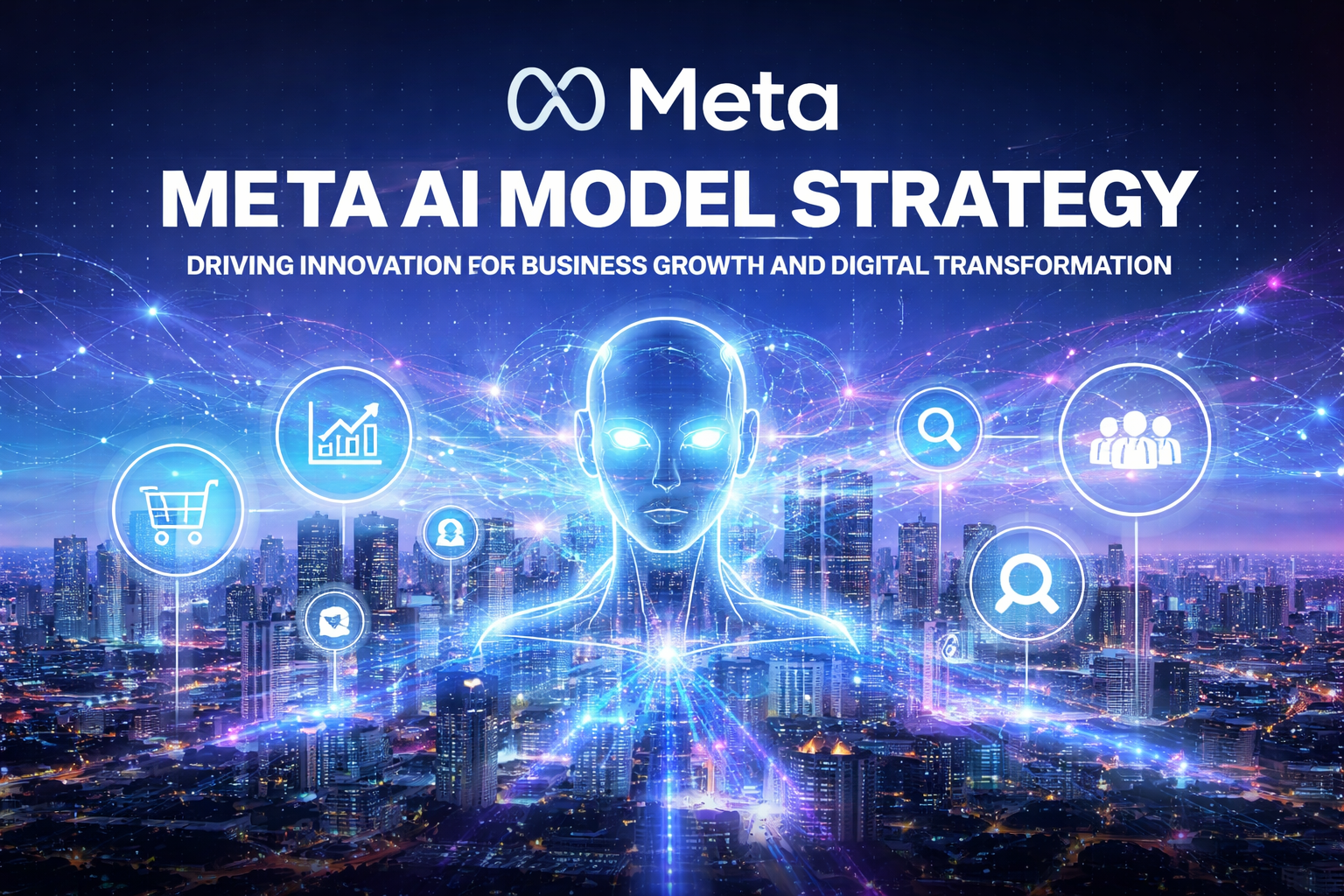
Meta AI model strategy is rapidly emerging as one of the most significant developments in the technology sector, reflecting how Meta Platforms is repositioning itself within the global artificial intelligence race. Once known primarily for social media dominance, Meta is now investing heavily in AI systems designed to reshape how users and businesses interact across its platforms. This shift is not only strategic but also competitive, as it places the company directly against established AI leaders.
At the centre of this transformation is Mark Zuckerberg, whose leadership has driven a renewed focus on building advanced AI models that can operate at scale. The Meta AI model strategy aims to integrate intelligence more deeply into Facebook, Instagram, and WhatsApp, creating seamless tools for communication, advertising, and business support. Unlike earlier phases of innovation, this approach prioritises system-wide integration rather than isolated features.
For businesses, the Meta AI model strategy offers practical benefits that extend beyond innovation headlines. Improved ad targeting, automated customer responses, and enhanced analytics are becoming central features of the platform. Small and medium-sized enterprises in particular stand to benefit, as AI tools reduce the need for specialist technical knowledge while still delivering high-level performance improvements in marketing campaigns.
This development also places Meta in direct competition with companies such as Google and OpenAI, both of which have established strong leadership in artificial intelligence research and deployment. However, Meta’s advantage lies in its massive user base, which allows it to test, refine, and scale AI models at an unprecedented rate. This ecosystem approach strengthens the Meta AI model strategy by embedding it within everyday digital behaviour.
A major focus of the Meta AI model strategy is accessibility. Instead of limiting advanced tools to large enterprises, Meta is aiming to democratise AI so that smaller businesses can also benefit. This includes simplified ad creation, automated insights, and improved customer interaction tools. As a result, businesses that previously struggled with digital transformation may now find it easier to compete in an increasingly data-driven environment.
However, the rise of AI integration also introduces important challenges. Concerns around data privacy, algorithmic transparency, and responsible usage remain central to discussions about Meta’s direction. Businesses using these tools must ensure compliance with regulations while also maintaining ethical standards. The success of the Meta AI model strategy will depend not only on technological capability but also on trust and governance.
From an operational perspective, AI-driven systems are already streamlining processes such as content moderation, audience segmentation, and performance tracking. These efficiencies allow businesses to focus more on strategy and less on manual tasks. In turn, this improves productivity and helps organisations adapt more quickly to changing market conditions, especially in highly competitive digital environments.
The broader industry impact of this strategy is significant, as it accelerates the global shift towards AI-first platforms. Competitors are likely to respond with their own innovations, leading to faster development cycles across the technology sector. This competitive pressure ultimately benefits businesses, which gain access to more powerful tools and more refined digital ecosystems.
For UK businesses in particular, the implications are substantial. As digital competition increases, the ability to leverage AI effectively becomes a key differentiator. Meta’s tools offer opportunities for improved customer engagement, more efficient advertising spend and better decision-making based on real-time insights. Early adopters of the Meta AI model strategy are likely to gain a strong advantage over slower-moving competitors.
In conclusion, the Meta AI model strategy represents a pivotal shift in how Meta Platforms is evolving within the global technology landscape. By integrating AI deeply into its ecosystem and competing directly with major industry players, Meta is reshaping expectations for digital platforms. Businesses that embrace this change early will be better positioned to thrive in an increasingly AI-driven economy, while those that delay may struggle to keep pace.