Meta Manus Acquisition China blocked: What it means for Businesses Relying on Meta Support
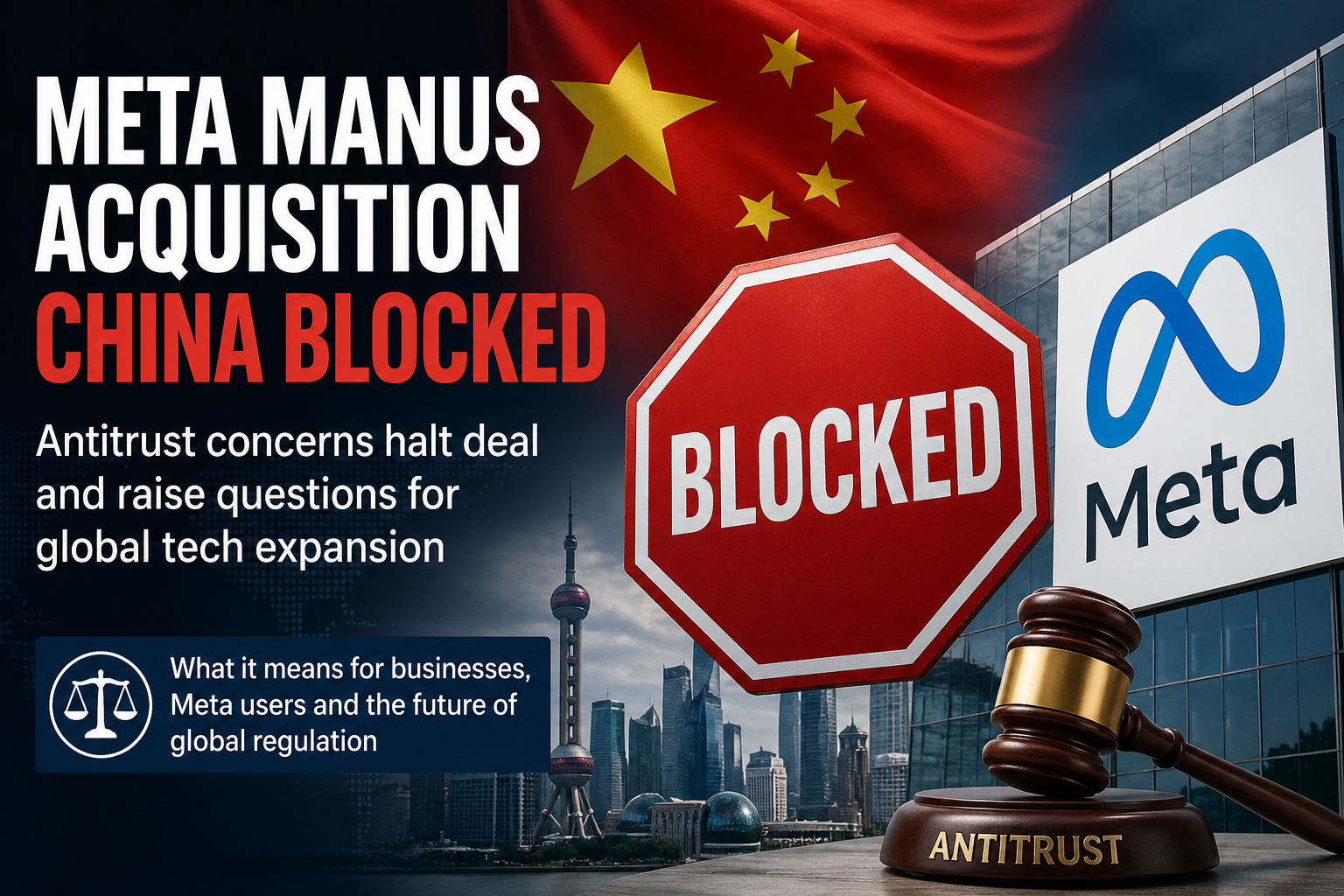
Meta Manus acquisition in China has quickly become a defining example of how global regulation can disrupt even the most strategically planned tech expansions. When China moved to block Meta’s proposed acquisition of Manus, it signalled far more than a single failed deal. It highlighted the growing complexity of international antitrust enforcement and exposed the fragile position that businesses find themselves in when they rely heavily on platforms like Facebook and Instagram without clear, consistent support from Meta itself. For UK business users already struggling to navigate Meta’s opaque support systems, this development adds another layer of uncertainty to an already complicated ecosystem.
From an expert standpoint, the Meta Manus acquisition of China decision underscores a broader shift in how governments are approaching large technology firms. Regulators are no longer simply reacting to mergers after the fact; they are proactively intervening to prevent consolidation that could limit competition or increase foreign influence in sensitive markets. China’s decision was rooted in antitrust concerns, but the implications extend well beyond competition law. It reflects geopolitical tensions, data sovereignty concerns, and a desire to maintain control over domestic digital infrastructure. For businesses that depend on Meta’s tools for advertising, customer engagement, and revenue generation, this kind of disruption can have indirect but meaningful consequences.
The Meta Manus acquisition in China case is particularly important because it reveals how vulnerable Meta’s global strategy is to regional regulatory frameworks. Meta has spent years attempting to expand its technological capabilities and strengthen its position in emerging markets through acquisitions. When those efforts are blocked, it not only delays innovation but can also limit the rollout of new features and services that businesses rely on. UK companies using Meta’s platforms often assume a level of stability and continuity that simply does not exist in reality. Decisions made in Beijing can ripple through to businesses in London, Manchester, or Birmingham without warning.
For business users of Facebook and Instagram, the real issue is not just the blocked acquisition itself but what it represents. Meta’s support infrastructure is already widely criticised for being inconsistent, slow, and often unresponsive. When the company faces regulatory setbacks like the Meta Manus acquisition in the China situation, internal priorities can shift dramatically. Resources may be redirected towards legal compliance, public relations, or restructuring efforts, leaving even less attention available for resolving user issues. This is particularly problematic for small and medium-sized enterprises that rely on Meta as a primary sales and marketing channel.
Another critical insight from the Meta Manus acquisition of China development is the increasing fragmentation of the global digital economy. Businesses often operate under the assumption that platforms like Meta provide a unified global service. In reality, the experience of using Meta can vary significantly depending on regulatory environments. Features available in one region may be restricted or delayed in another. Data handling practices may differ. Advertising policies can change without clear communication. The blocked acquisition reinforces the idea that businesses cannot rely solely on Meta to provide a stable and predictable platform environment.
For UK-based companies, this creates a pressing need to rethink platform dependency. While Meta remains a powerful tool for reaching audiences, the Meta Manus acquisition China case demonstrates that external factors can quickly alter the landscape. Businesses should be diversifying their digital strategies, investing in owned channels such as email marketing, websites, and alternative advertising platforms. Relying exclusively on Meta is increasingly risky, particularly when the company itself is navigating complex global challenges.
From a support perspective, the situation highlights a long-standing issue that many businesses face: the lack of accessible, reliable assistance from Meta when problems arise. Whether it is ad account suspensions, billing issues, or unexplained drops in reach, users often find themselves without clear answers. The Meta Manus acquisition in China scenario suggests that these problems may become even more pronounced as the company deals with regulatory pressures. When Meta is focused on defending its global strategy, individual user concerns can easily fall through the cracks.
There is also a strategic lesson to be learned regarding transparency. The Meta Manus acquisition China decision was driven by regulatory reasoning, yet the downstream impact on businesses is rarely explained in a way that users can understand. This disconnect creates confusion and erodes trust. Businesses need to be proactive in seeking information, staying updated on industry developments, and not relying solely on Meta for guidance.
Looking ahead, the Meta Manus acquisition in China may set a precedent for future regulatory actions. Other countries could adopt similar approaches, particularly as concerns about big tech dominance continue to grow. This means that disruptions of this nature could become more common rather than exceptional. For businesses, the key is resilience. Building flexible strategies, maintaining control over customer data, and reducing reliance on any single platform are essential steps in navigating this evolving environment.
In conclusion, Meta’s acquisition of China is more than just a blocked deal; it is a clear indication of the challenges facing global tech companies and the businesses that depend on them. It exposes the limitations of Meta’s support systems, highlights the risks of platform dependency, and underscores the importance of strategic diversification. For UK business users seeking reliable insights and solutions, understanding developments like this is crucial. The digital landscape is no longer predictable, and those who adapt quickly will be best positioned to succeed despite the uncertainties created by decisions such as the Meta Manus acquisition in China.