Are Social Platforms Charging Users for Total Access?
Are social platforms charging users for total access, or will your favourite networks remain completely free to use? As a UK business owner or digital marketer, you have likely noticed the growing number of subscription pop-ups appearing on your feeds. From Meta Verified to premium ad-free tiers, the shifting digital landscape has triggered widespread concern across the British business community.
Many independent brands rely heavily on organic reach to engage with local consumers and drive cost-effective conversions. Navigating platform instability and sudden policy changes can feel like a full-time job when you are trying to scale an enterprise. Understanding whether a universal paywall is imminent is crucial for safeguarding your digital marketing strategy and protecting your hard-earned profit margins.
The short answer is no; major social networks are not planning to lock their core platforms behind a mandatory paywall for everyone. However, the foundational economics of the internet are shifting from a purely ad-supported model to a layered, hybrid system. Let us break down what this structural evolution means for your company’s online visibility, operational workflows, and marketing budget.
Why Are Social Platforms Charging Users via Paid Subscriptions
The age of entirely free, unregulated data collection is drawing to a close across Europe and the United Kingdom. Regulatory pressures, particularly those related to user tracking and surveillance advertising, have compelled tech companies to reassess their monetization strategies. Additionally, the massive computational costs associated with powering advanced artificial intelligence features have created an urgent need for predictable, recurring revenue streams.
Instead of charging a blanket fee to access the basic app, tech networks are implementing a “freemium” monetization framework. This infrastructure preserves a free, ad-supported tier for the general public while charging power users and commercial entities for advanced features. For businesses wondering if these networks are moving away from ad models completely, the reality is that they are simply diversifying their income.
The Reality of Meta’s Subscription Framework in the UK
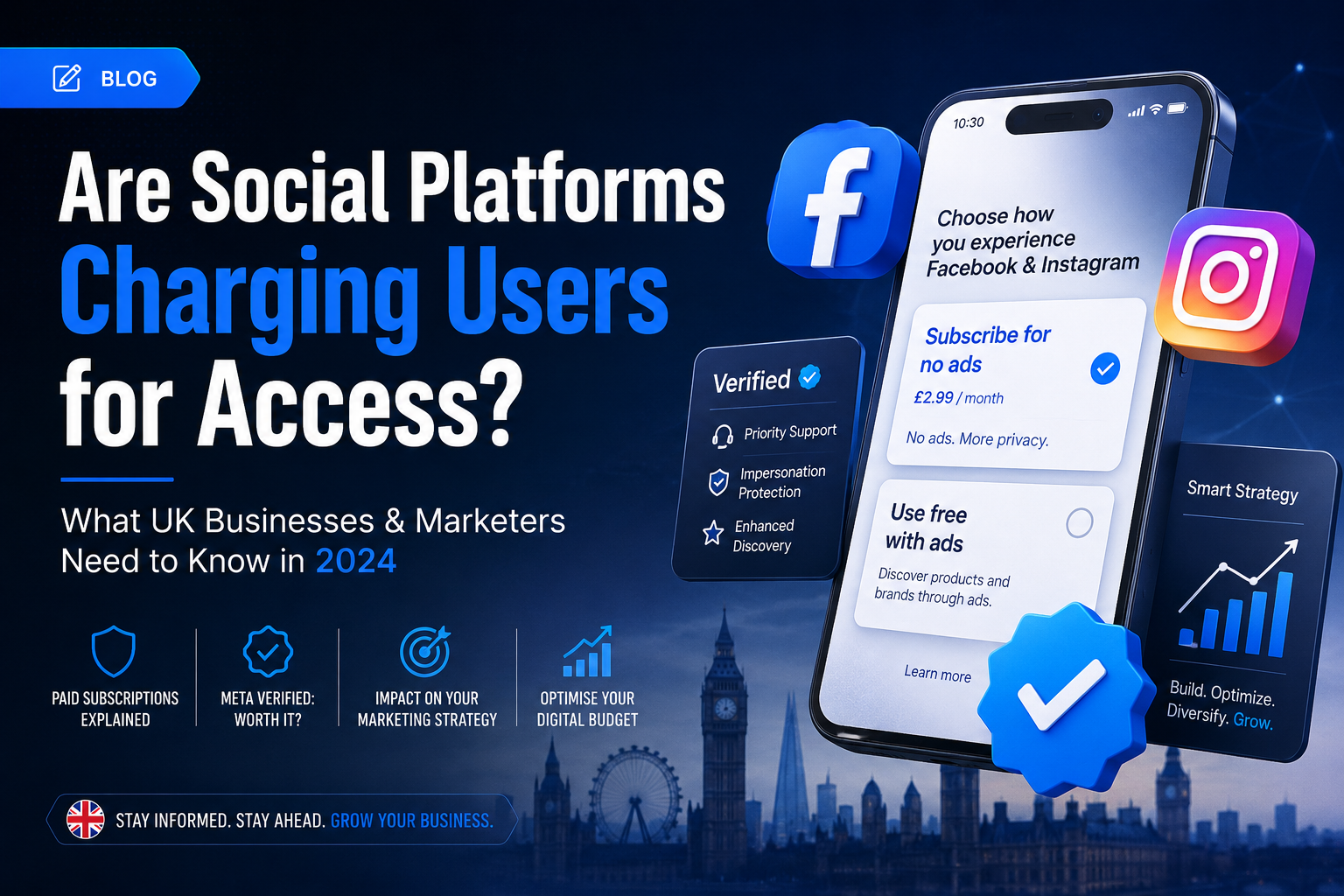
To comply with strict data regulations from the UK Information Commissioner’s Office (ICO), Meta introduced a “Subscription for no ads” model. For £2.99 per month on the web (or £3.99 on iOS and Android), British consumers can choose to entirely opt out of tracking and advertising. If a consumer decides not to pay this monthly fee, they can continue using Instagram and Facebook for free.
For UK digital marketers, this structural change introduces a layer of friction to standard audience targeting and campaign delivery. When users opt out of tracking via paid subscriptions, your pixel data and target demographic pools naturally experience a minor contraction. This makes optimizing your pixel events and refining your first-party data capture strategies more critical than ever before.
Why Are Social Platforms Charging Users via Paid Subscriptions
The rise of consumer-focused upgrades like Facebook Plus, Instagram Plus, and WhatsApp Plus directly alters user engagement patterns. Priced around £3.99 globally, these upgrades offer everyday consumers advanced profile customization, anonymous story viewing, and enhanced chat filters. While these consumer updates seem cosmetic, they quietly change how your target audience navigates and consumes organic social media content.
For instance, users with enhanced story management can alter how long their content remains active or how they filter brand messages. For small businesses assessing if are social platforms charging users for basic functionality, the focus should instead remain on content quality. Succeeding in an increasingly fragmented digital ecosystem requires high-value, highly intentional creative assets that compel users to pause their scrolling.
Are Social Platforms Charging Users for Meta Verified?
While basic access remains free, professional verification has rapidly become an essential line item for ambitious commercial operations. Meta Verified for business functions is less like a vanity badge and more like an operational insurance policy for your brand. Depending on the scale of your enterprise, tiers range from basic verification to enterprise-grade packages.
Priority Support Pathways: Verified profiles receive direct access to human customer service representatives to resolve technical errors and account freezes.
Impersonation Protection: Automated monitoring systems actively flag and take down fraudulent accounts attempting to copy your brand.
Enhanced Discovery Tools: Subscribed profiles frequently receive search optimization advantages and expanded messaging features within WhatsApp Business.
Industry Insight: If your enterprise relies on Facebook Ads Manager or Instagram Shopping to generate active leads, priority support access alone makes the subscription cost worthwhile.
How to Optimise Your Digital Marketing Budget for Paid Social Tiers
Faced with a fragmenting landscape, smart UK brands are audits-testing their current digital asset allocations to maximize efficiency. Relying entirely on a single unowned distribution network leaves your customer acquisition pipelines vulnerable to sudden algorithmic updates or policy changes. Building a resilient, multi-channel digital presence is the most reliable way to maintain consistent revenue growth.
Prioritise First-Party Data: Accelerate your email marketing and SMS registration efforts to ensure you own your primary customer lists directly.
Secure Your Core Accounts: Evaluate whether investing in a Meta Verified tier is necessary to protect your digital storefront from copycats.
Refine Paid Ad Attribution: Use advanced server-side tracking, such as the Conversions API, to counteract signal loss from ad-free subscribers.
Diversify Organic Channels: Distribute your creative assets across multiple networks to mitigate the sudden impact of any single platform’s changes.