Meta Fined $567 Million for Failing to Protect Teens: What UK Marketers Need to Know
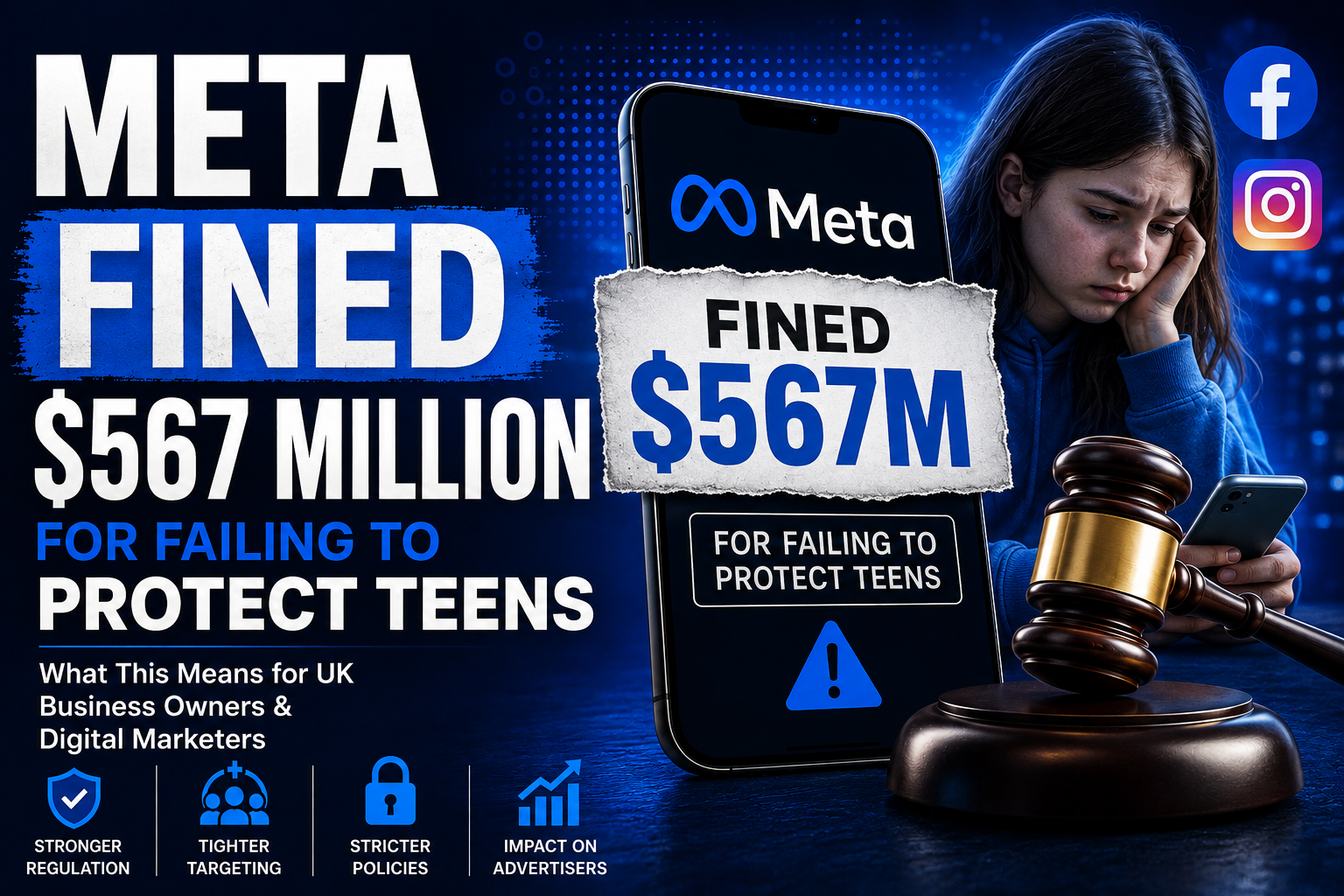
Meta fined $567 million for failing to protect teens signals a massive regulatory shift that directly impacts how UK business owners and digital marketers operate on Facebook and Instagram.
This landmark ruling highlights growing international scrutiny over platform safety, algorithmic design, and child privacy. For British businesses relying on Meta’s ad ecosystem, regulatory fines of this magnitude inevitably lead to stricter platform policies, sudden ad account reviews, and reduced targeting capabilities.
Why was Meta Fined $567 Million for failing to Protect Teens?
A US court ordered the social media giant to pay abatement funds after being Meta fined $567 million for creating a public nuisance through platform features that exposed young users to risk. The judge ruled that Meta failed to adequately protect minors from inappropriate content, addictive feature designs, and privacy vulnerabilities across Facebook and Instagram. This $567 million penalty comes on top of a prior $375 million civil penalty in the same legal battle, bringing total damages to nearly $1 billion.
Court documents revealed that automated recommendation engines systematically prioritized engagement over user welfare. Furthermore, internal warnings regarding minor safety were repeatedly downplayed or ignored in favor of platform growth.
For UK advertisers, this landmark decision is not an isolated incident across the Atlantic. Regulators across the UK and the European Union, including the ICO and Ofcom under the Online Safety Act, are implementing similarly stringent standards.
Takeaways from the Ruling: Meta Fined $567 Million
The details of the ruling reveal several key factors that led directly to the court’s decision against Meta:
Systemic Platform Safety Failures: Regulators determined that default privacy settings failed to safeguard young users from predatory contact and harmful materials.
Addictive Algorithmic Architecture: Core platform features like infinite scroll, notification triggers, and automated recommendations were identified as psychologically harmful.
Mandated Operational Remedies: The court ordered Meta to introduce monthly usage limits, notification curfews, and tighter restrictions on adult-to-minor interactions.
Misleading Safety Claims: Jurors found that Meta misrepresented the security and suitability of its channels for younger demographics.
These findings demonstrate that regulatory bodies are no longer tolerating passive safety measures or self-regulation by social media platforms.
How Tightening Teen Protections Impacts UK Business Advertisers
When headlines break about Meta fined $567 million for compliance failures, the downstream effects hit advertisers almost immediately. Meta routinely updates its automated enforcement systems to appease regulators, leading to heightened account sensitivity.
Restricted Targeting Options for Minor Audiences
In response to global regulatory pressure, Meta has continuously restricted age, gender, and interest-based ad targeting for users under 18. UK business owners operating in sectors such as youth fashion, education, gaming, or sports apparel can no longer rely on granular behavioural signals.
Advertisers must pivot toward broader demographic targeting and contextual creative messaging to engage younger audiences legally and ethically.
Frequent Platform Instability and Algorithmic Adjustments
To comply with court-mandated safety overhauls, Meta frequently deploys aggressive updates to its ad review AI. Unfortunately, these automated bots often flag compliant accounts by mistake. UK marketers frequently report sudden ad rejections, restricted Business Managers, or unexpected disabling of Meta Pixel data sharing during major platform transitions.
Actionable Steps to Protect Campaigns After Meta Fined $567 Million
To ensure your business remains compliant and avoids costly account suspensions during regulatory shifts, follow these practical steps:
Audit Your Audience Targeting: Ensure your campaigns do not inadvertently target restricted under-18 demographics with prohibited product categories.
Review Creative Compliance: Avoid using high-pressure engagement tactics, misleading claims, or inappropriate imagery that could trigger Meta’s automated safety filters.
Diversify Data Sources: Rely on first-party data collection and server-side tracking (Conversions API) to maintain campaign performance despite browser and platform privacy restrictions.
Establish Backup Ad Infrastructure: Maintain verified Business Managers, multiple admin profiles, and secondary payment methods to minimize downtime if an automated flag occurs.