Meta AI Chatbots Project Omni Explained: How Project Omni Will Change DM Support
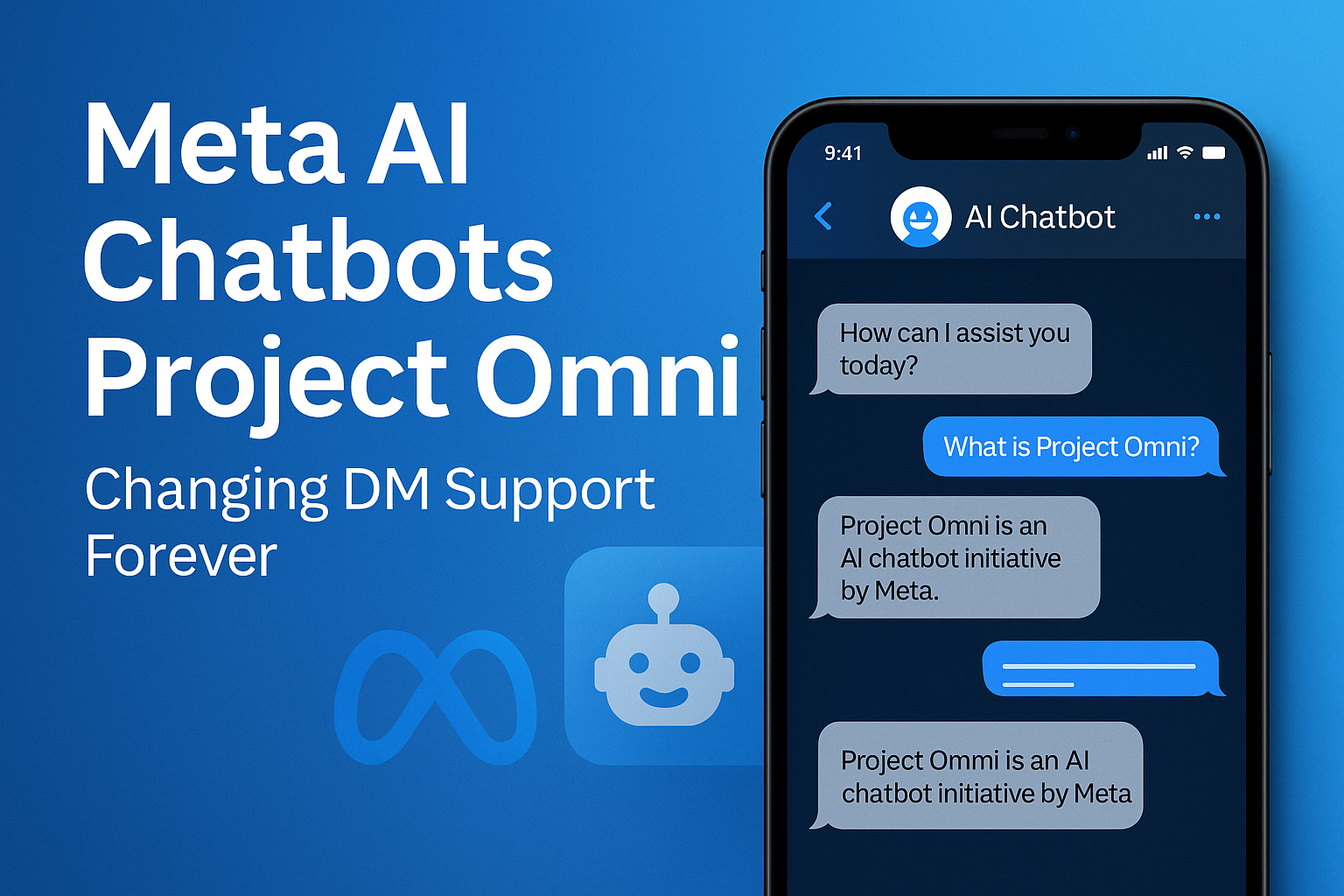
Meta AI Chatbots Project Omni is being presented as a bold step forward for Meta as it strives to close the widening gap in direct messaging support across Facebook, Instagram, and WhatsApp. Despite being one of the world’s biggest technology companies with billions of daily users, Meta has long faced criticism for poor support options, especially for businesses and creators who rely on its platforms to connect with customers and followers. The arrival of Meta AI Chatbots Project Omni marks an ambitious attempt to automate that weak point, using generative AI to transform the way DMs are managed at scale.
At its core, Meta AI Chatbots Project Omni is not just another auto-responder. Instead, it is an advanced, context-aware chatbot suite built on Meta’s growing large language model capabilities. Drawing on similar technology that powers other well-known AI models, Project Omni is designed to read, understand and reply to messages in a way that feels human-like, contextual and, ideally, brand-appropriate. For overwhelmed business pages, influencers with millions of fans, and brands fielding endless product questions, this tool could prove to be the missing link in delivering quick, helpful replies around the clock.
What sets Meta AI Chatbots Project Omni apart from standard scripted bots is its promise of personalisation. Rather than pushing out generic replies, Project Omni can be trained to reflect a brand’s voice, reuse previous conversation data, and provide answers that feel specific and conversational. A question about store hours, returns or new product drops could trigger a helpful, detailed answer without waiting for a human team to step in. For creators, the same applies—fans could receive a reply that mirrors the tone and style of their favourite influencer, boosting engagement without draining the creator’s time.
The motivation for Meta AI Chatbots Project Omni is clear when one considers the sheer volume of messages flowing through Meta’s family of apps daily. Businesses, in particular, face mounting pressure to be ‘always on’. Delayed replies mean lost sales, missed leads and frustrated customers who may switch to competitors. By rolling out AI that plugs straight into the DMs, Meta aims to keep users within its ecosystem while positioning its tools as indispensable for business growth and retention.
For Meta, Meta AI Chatbots Project Omni also doubles up as a new channel for monetisation. Imagine a potential customer tapping a product tag on Instagram and asking for shipping details. Instead of waiting hours for an answer, the chatbot replies instantly, shares the purchase link and nudges the buyer to checkout—seamlessly blending support with sales. This push towards commerce-focused messaging is entirely in line with Meta’s ambition to transform its platforms from simple social networks into fully-fledged shopping and customer service destinations.
However, the rollout of Meta AI Chatbots Project Omni does not come without caveats. One of the biggest concerns is authenticity. While the technology promises natural conversations, businesses and customers alike might feel uneasy knowing they are chatting with a machine instead of a real person. Meta says it will disclose when AI is responding, but whether that is enough to maintain trust is an open question. Too much automation risks making interactions feel sterile and scripted, which could erode the sense of genuine community that many brands and creators work hard to build.
Privacy is another thorny issue. Training Meta AI Chatbots Project Omni requires vast amounts of data, including previous conversations. Although Meta claims it takes user privacy seriously, the idea that an AI is learning from private DMs is bound to raise eyebrows and draw regulatory attention. How this data is used, stored and safeguarded will likely determine how comfortable brands and users feel embracing the technology.
Regulators are watching closely too. The more powerful generative AI becomes, the higher the risk of it producing misleading or even harmful replies. Meta will need robust safeguards to ensure that Meta AI Chatbots Project Omni doesn’t push out inaccurate information or inadvertently damage a brand’s reputation. The company’s history with data privacy and misinformation means it can ill afford high-profile slip-ups at a time when trust in big tech is already fragile.
For businesses, the promise of Meta AI Chatbots Project Omni is enticing but not without strings attached. Adopting this new layer of AI support means investing time in training the system, monitoring its performance and tweaking it to stay aligned with brand guidelines. Small businesses might welcome the chance to handle more queries without expanding staff, but larger brands will likely need entire teams to manage the AI’s performance and protect their reputation.
Despite the hurdles, the business case for Meta AI Chatbots Project Omni is compelling. Speed is king in digital customer service, and customers expect near-instant responses, no matter the time of day. If Meta can deliver an AI tool that reduces wait times, resolves basic questions and filters only the complex cases to human agents, it could help businesses work more efficiently while delighting customers who simply want answers fast.
Another selling point is customisation. Meta AI Chatbots Project Omni isn’t designed to be a one-size-fits-all bot. Instead, businesses will have the power to decide what gets automated and what stays human. For example, high-touch customer issues, complaints or sensitive topics can be flagged for manual handling, while routine questions get routed to the AI. This balance is vital if the system is to be accepted as a support enhancement rather than a cheap replacement for real people.
It is also clear that Meta views Meta AI Chatbots Project Omni as a piece of a bigger puzzle. The company has poured massive resources into its AI research arm, developing models like LLaMA to compete with OpenAI and Google. Project Omni shows how this technology can be deployed practically within Meta’s platforms to boost user engagement, enhance advertising ROI and strengthen Meta’s dominance in the AI space. The more businesses that adopt Project Omni, the more data Meta can feed back into its AI systems, refining them further and reinforcing its competitive edge.
Looking ahead, it is unlikely that Meta AI Chatbots Project Omni will stay static. Expect iterations to add new features such as multilingual support, voice replies and smarter context awareness. Meta might even integrate augmented reality to create more immersive chatbot experiences in the future. For early adopters, this means staying agile and ready to adapt their use of AI as the technology matures.
Yet, for all its technical promise, the success of Meta AI Chatbots Project Omni will ultimately rest on perception. Will customers appreciate the convenience of instant replies, or will they grow weary of speaking to machines? Can businesses maintain an authentic voice and meaningful relationships when so much of the conversation is handled by AI? Meta must strike the right balance between automation and the human touch to prevent DMs from becoming just another cold sales funnel.
Businesses interested in using Meta AI Chatbots Project Omni would be wise to approach with clear goals. They should start small, test the AI’s capabilities, gather feedback and adjust their chatbot settings carefully. They should also communicate openly with customers, making it clear when they are interacting with AI and ensuring there’s an easy way to escalate issues to a human if needed.
In the end, Meta AI Chatbots Project Omni is a window into where social media and customer service are headed. As AI weaves deeper into our digital lives, it will automate tasks we once thought required a human hand. Whether that is a welcome shift or a step too far will depend on how brands wield this technology and whether Meta can keep its promise of smart, reliable and respectful automation.
For Meta, success would mean securing its role as the default home for social commerce and customer engagement. For businesses, success would mean faster responses, more sales, and fewer missed opportunities. And for customers, success would mean answers that feel as real as they are quick. This sits at the centre of competing it’s goals, and how well it balances them may define the next decade of digital interaction.